

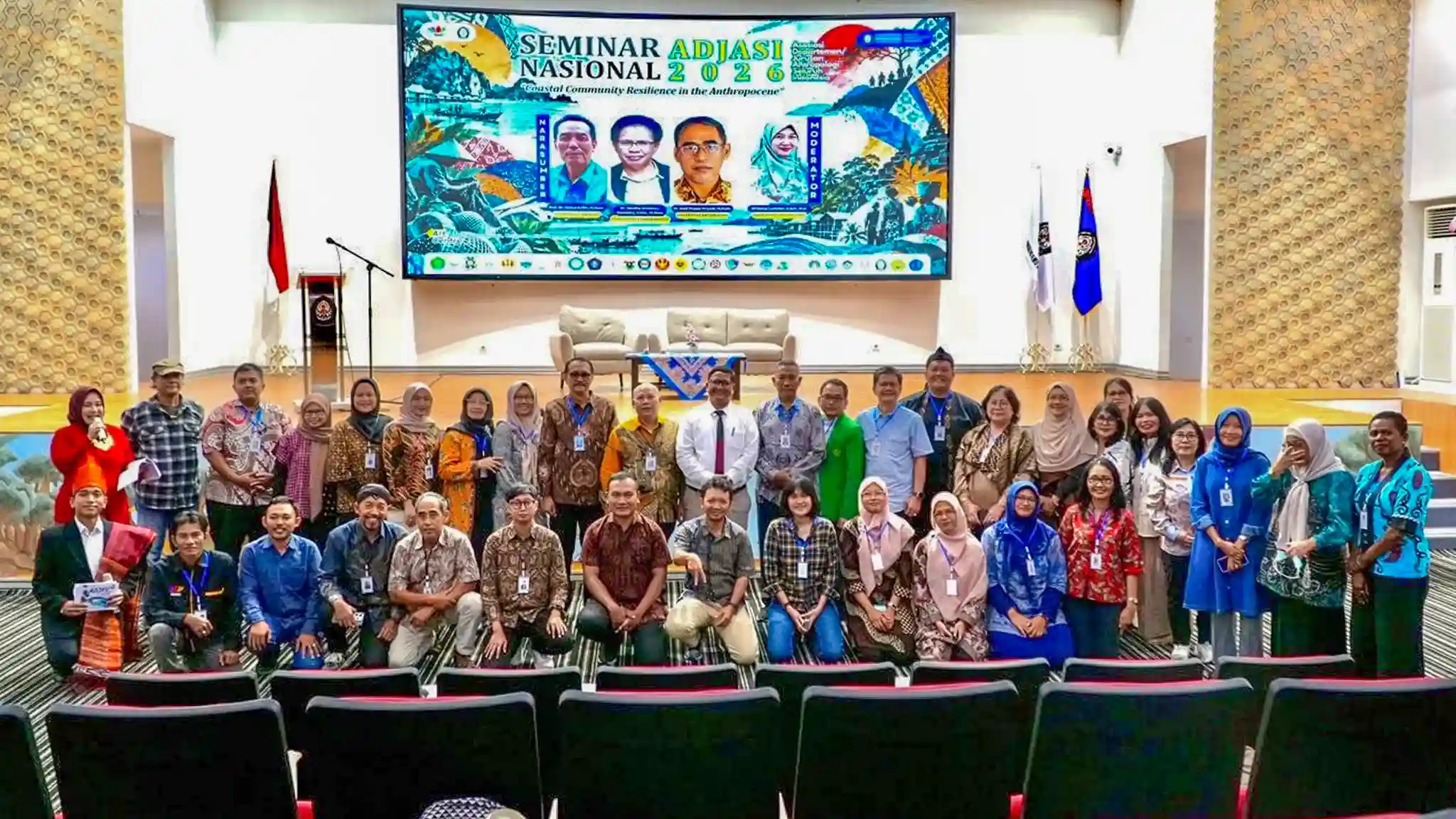
UNDIP, Semarang (25/9) – A total of 64 anthropology academics from various universities across Indonesia gathered at the Art Center Building of the Faculty of Humanities, Universitas Diponegoro (FIB UNDIP), to take part in the 2026 National Working Meeting of the Association of Anthropology Departments and Study Programs throughout Indonesia (Rakernas ADJASI), held from September 21 to 24, 2026, in Karimunjawa.
The morning’s series of activities opened with a lively Kepyar Dance performance by the Traditional Creative Dance Community Student Activity Unit of FIB UNDIP. The event then continued with remarks from the Organizing Committee Chair, Arido Laksono, S.S., M.Hum., followed by remarks from the Head of the Social Anthropology Study Program, Dr. Suyanto, M.Si., and the official opening by the Dean of UNDIP’s Faculty of Humanities, Prof. Dr. Alamsyah, M.Hum.
During the afternoon session after the break, the event resumed with remarks from the Chair of ADJASI, Dr. Rina Hermawati, S.IP., M.Si., followed by the national seminar agenda.
In addition to discussing the association’s internal agenda, participants were invited to join a national seminar themed “Coastal Community Resilience in the Anthropocene.”
Moderated by Afidatul Lathifah, S.Ant., M.A., the seminar featured two main speakers: Prof. Dr. Zainal Arifin, M.Hum. from Universitas Andalas (Unand), who delivered a presentation entitled “Rivers as Cultural Keystone Places of Cultural Identity,” and Dr. Budi Puspo Priyadi, M.Hum. from UNDIP, who presented “Will the Nusantara Capital City (IKN) Erode Java’s Hegemony?”
Both speakers shared their perspectives on current livelihood challenges and the dynamics of adaptive spaces among coastal communities. During the afternoon session, the organizing committee also guided the field trip to Karimunjawa, scheduled for the following day. This annual agenda is expected not only to strengthen synergy among anthropology academics across Indonesia, but also to generate meaningful ideas and contributions for the sustainability and preservation of Indonesia’s coastal regions. (Public Communication/UNDIP)