



UNDIP, Semarang (January 3, 2026) – Universitas Diponegoro (UNDIP) continues to strengthen its role as a research university by introducing appropriate technological innovations that deliver direct impact to society. One of its latest breakthroughs is a hybrid solar–biomass paddy drying technology using low-humidity air media. This technology is designed to improve energy efficiency and to maintain the quality of milled dry paddy more quickly and consistently.
The innovative drying device was developed by Prof. Dr. Moh. Djeni, S.T., M.Eng. (Consortium Leader, Team 1–UNDIP), together with Dr. Laeli Kurniasari, S.T., M.T. (Consortium Leader, Team 2–Unwahas), Prof. Ir. Andri Cahyo Kumoro, S.T., M.T., Ph.D., IPU, ASEAN Eng. (Consortium Leader, Team 3–UNDIP), and Anang Yudi Riswanto, S.T., M.M. (industry partner – PT Mutiara Global Industry). The innovation is designed in a portable model equipped with a wheeled chassis and towing mechanism, enabling easy mobilization to various farming areas, especially regions without electricity access or permanent drying facilities. Heat is generated from biomass combustion with controlled airflow.
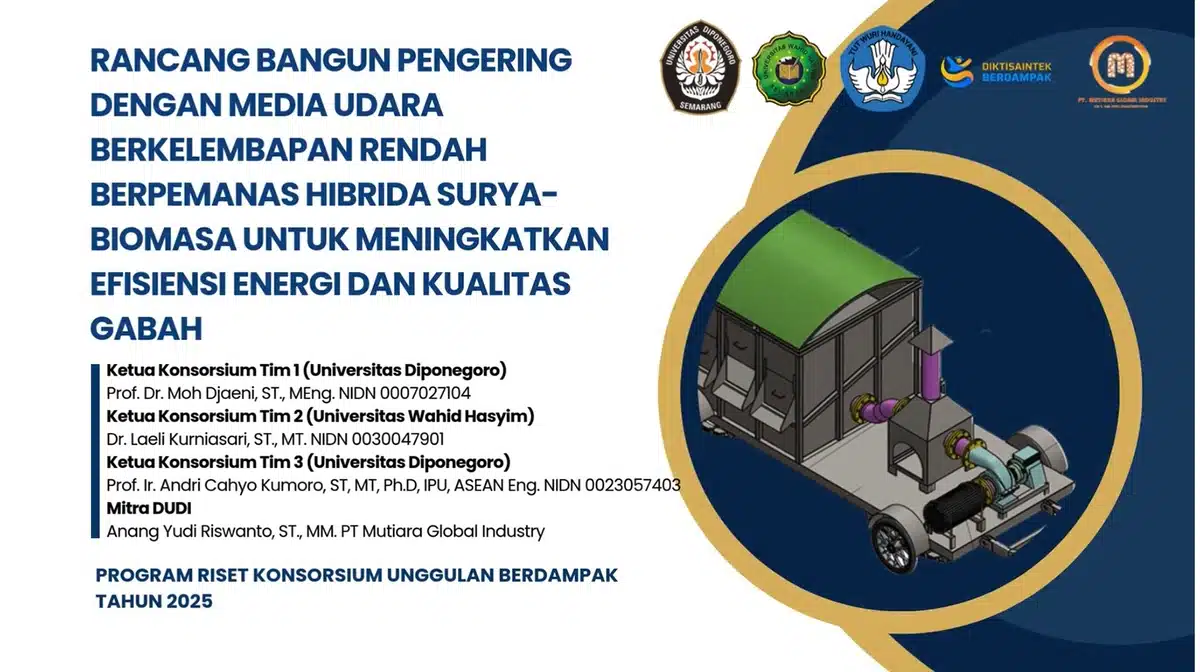
The main advantage of this technology lies in its use of a zeolite column that reduces air humidity before it enters the heating system, producing dry air that is far more effective in absorbing moisture from the paddy.
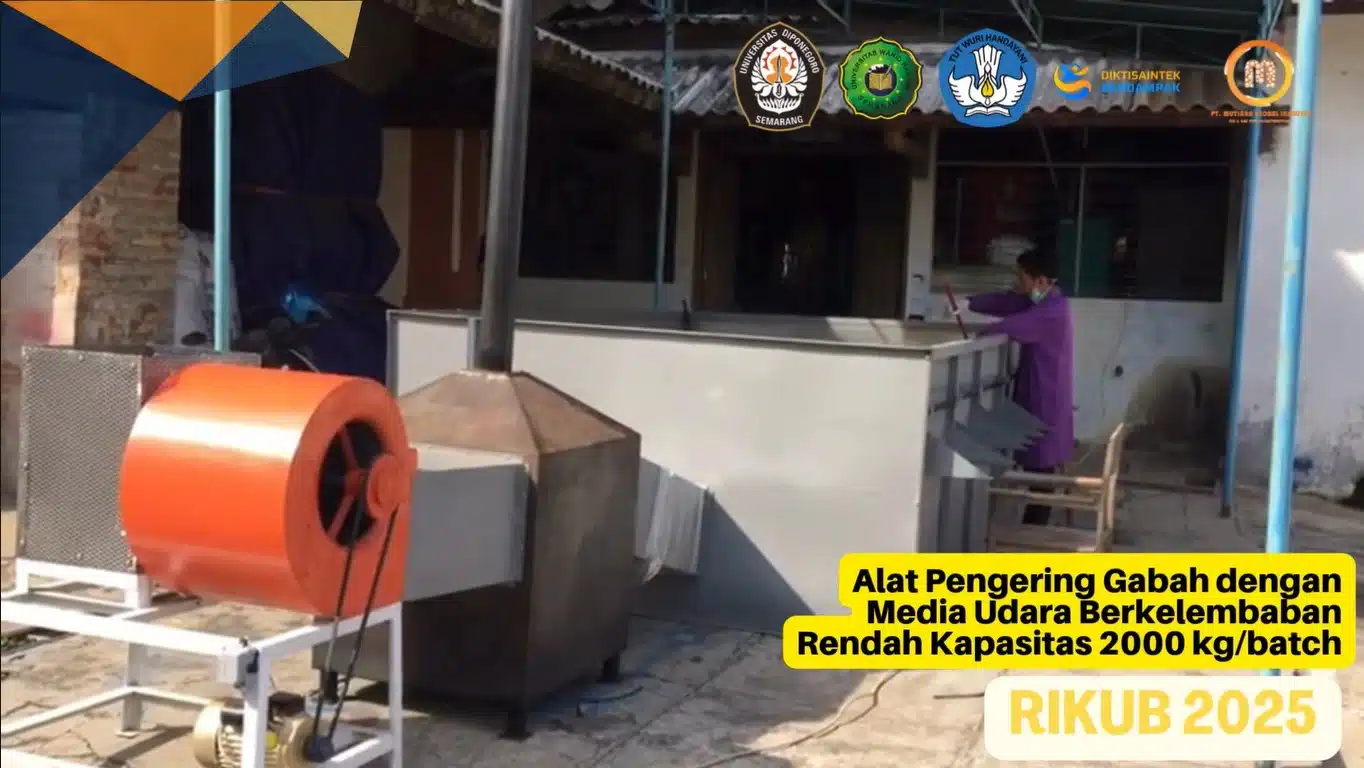
In addition to the portable model, the innovation also includes a large-capacity bed dryer unit of up to 2,000 kg per batch, equipped with a dehumidification unit using silica gel or zeolite. To enhance operational efficiency, the system is fitted with a hydraulic mechanism that facilitates the discharge of dried paddy. This feature enables faster, safer, and more labor-efficient loading and unloading processes. The development of this technology is supported by the 2025 RIKUB (Riset Konsorsium Unggulan Berdampak) / Flagship Impact Research Consortium, a grant from the Ministry of Higher Education, Science, and Technology through the Directorate General of Research and Development.
Looking ahead, the hybrid paddy dryer is expected to become a key pillar in strengthening national food security, particularly in addressing weather anomalies that often pose significant challenges to farmers during harvest seasons. With drier, more stable paddy yields, farm-gate prices are expected to increase, along with reduced post-harvest losses. This initiative underscores the dedication of UNDIP and all consortium members to realizing a modern, independent, efficient, and globally competitive agricultural ecosystem.
The development of this technology aligns with UNDIP’s commitment to supporting research downstreaming and strengthening community economies through the utilization of research outcomes. Through this innovation, UNDIP aims to enhance the competitiveness of local products while promoting the independence of industries based on regional potential. (Public Communication/UNDIP/Dhany)