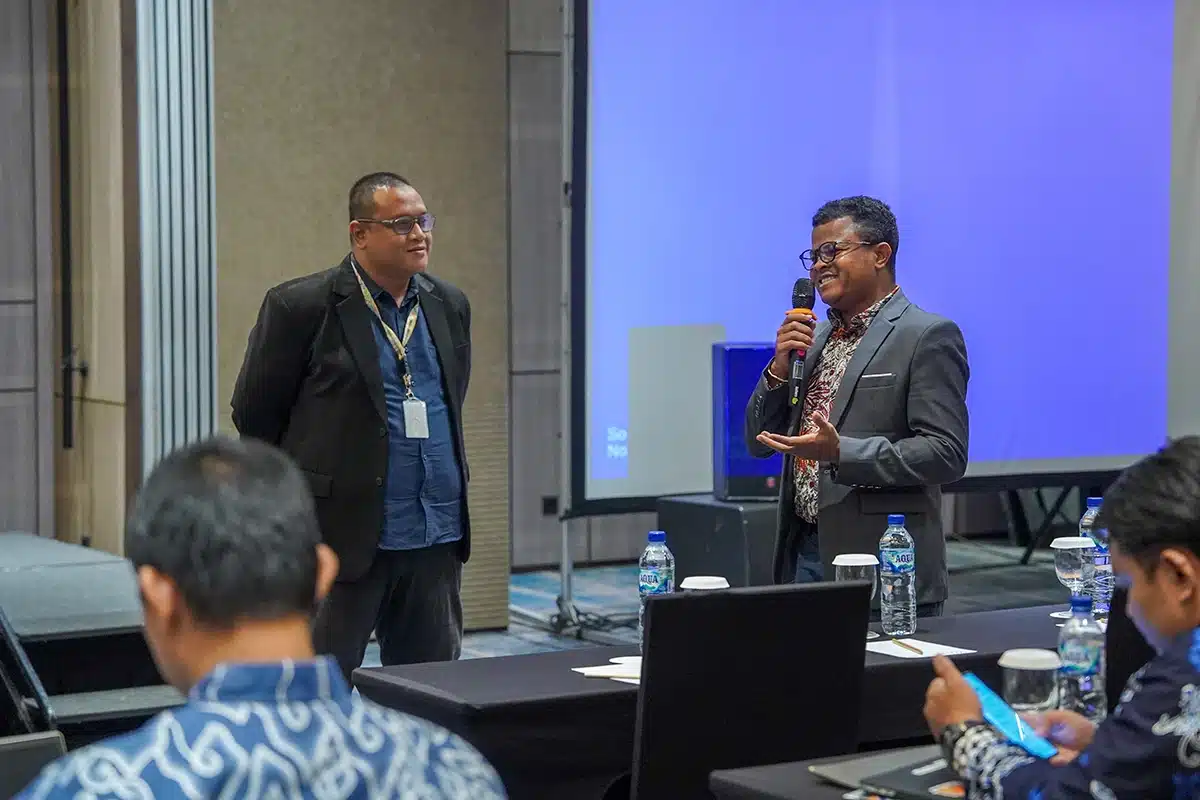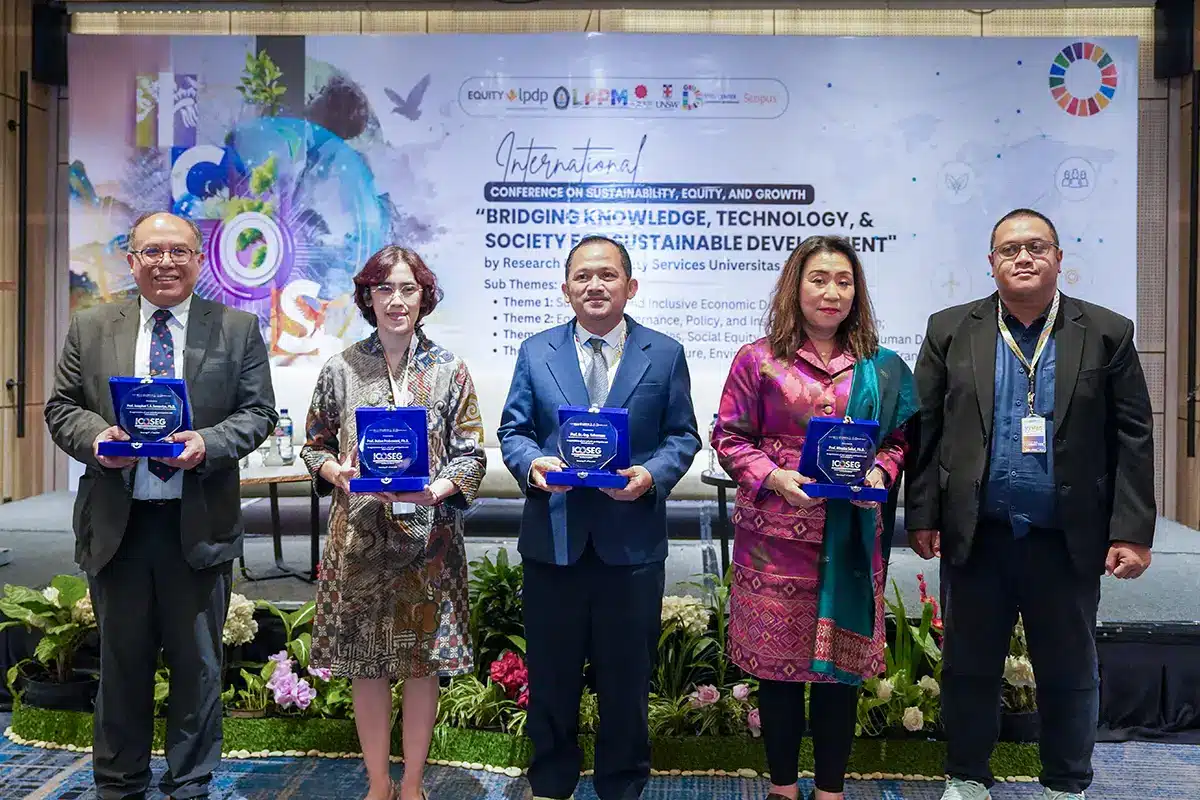


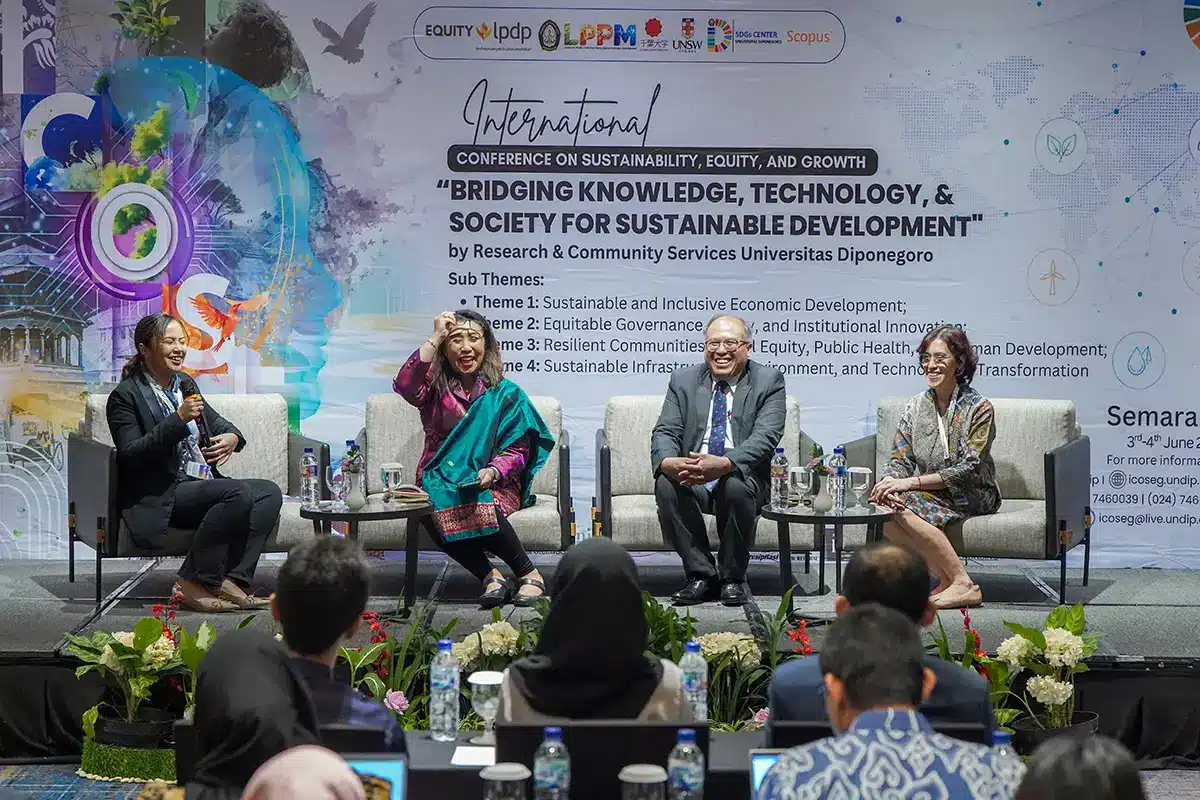
UNDIP, Semarang (4/6) – Universitas Diponegoro (UNDIP), through its Institute for Research and Community Services (LPPM), successfully organized the International Conference on Sustainability, Equity, and Growth (ICOSEG) 2026. The international conference, themed“Bridging Knowledge, Technology, and Society for Sustainable Development,” was held on June 3–4, 2026, at the Kapuas Grand Ballroom, Hotel Aruss Semarang. The global forum brought together researchers, academics, practitioners, industry representatives, students, and policymakers from Indonesia and abroad.
The Head of LPPM UNDIP officially opened the conference, Prof. Dr. Ing. Ir. Suherman, S.T., M.T. In his remarks, he emphasized that ICOSEG 2026 reflects a shared commitment to strengthening global collaboration and advancing the role of research and innovation in sustainable development. According to him, sustainability today extends beyond environmental concerns and encompasses social dimensions, equitable governance, technological advancement, and economic resilience.
“Sustainable development must be understood as a shared agenda that requires collaboration across disciplines, institutions, and countries to generate adaptive, inclusive, and impactful solutions for society,” said Prof. Suherman.
He further highlighted that universities play a vital role not only as centers of knowledge production but also as catalysts for transformative solutions that create tangible societal impact. Through research, academic collaboration, and community engagement, higher education institutions are expected to actively contribute to building a more sustainable, inclusive, and equitable future. “Universities must go beyond producing knowledge; they must be capable of translating research into innovation and real contributions to solving societal challenges,” he added.
Prof. Suherman also expressed hope that ICOSEG 2026 would foster productive academic exchange, inspire future collaborations, and generate impactful research to advance sustainable, inclusive, and resilient development across regions and communities.
Similarly, Dr. Anang Wahyu Sejati, Chair of ICOSEG 2026, stated that the conference serves as a strategic platform to strengthen interdisciplinary dialogue, academic exchange, and innovative collaboration to address global development challenges.
“We hope ICOSEG 2026 becomes a space for learning, collaboration, and shared purpose in producing meaningful contributions toward a more sustainable, equitable, and resilient future. As issues of sustainability, social equity, technological transformation, and environmental resilience become increasingly interconnected, collaboration among academics, practitioners, industry leaders, and policymakers is more important than ever,” he remarked.
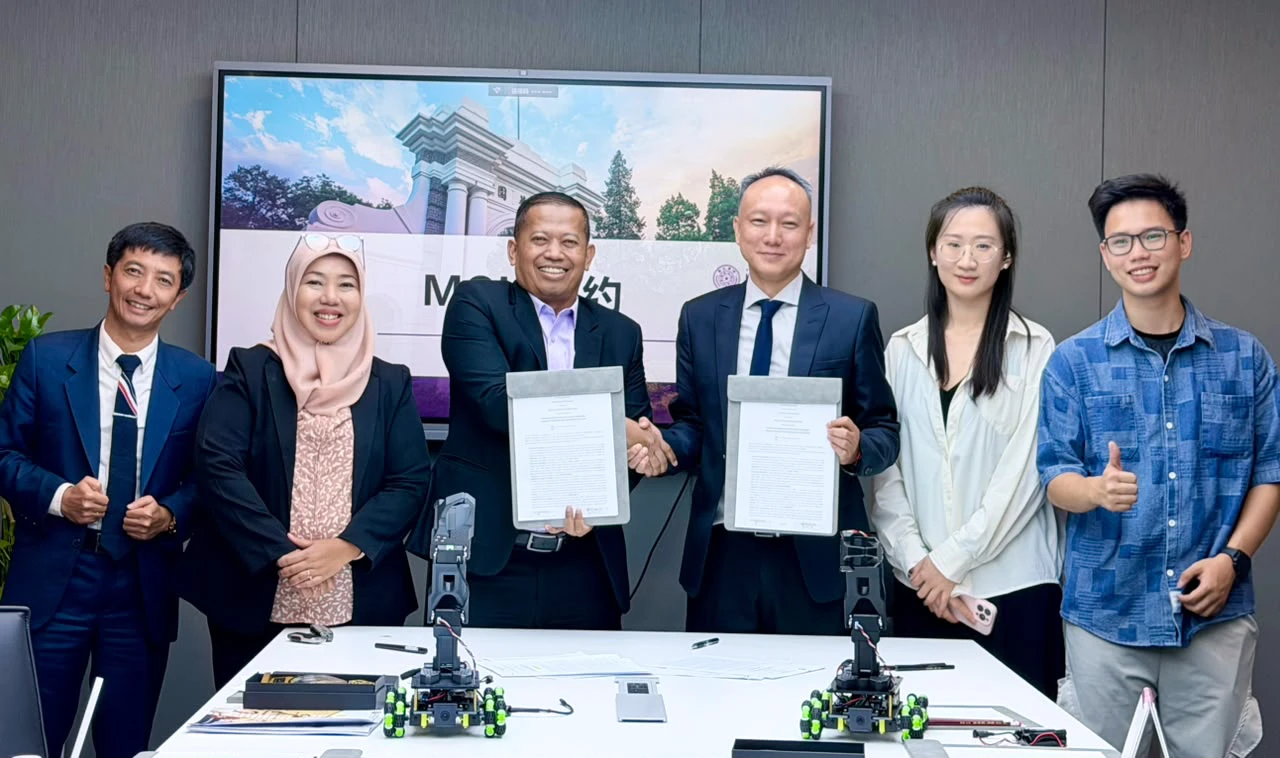
ICOSEG 2026 was organized in collaboration with two renowned international university partners—Chiba University and The University of New South Wales—and received full support from the Enhancing Quality Education for International University Impact and Recognition (EQUITY) Program through the Higher Education Endowment Fund (DAPT) managed by LPDP.
Moderated by Chely Novia Bramiana, Ph.D., the conference featured three distinguished international experts:
- Prof. Minako Sakai, Ph.D., from UNSW Canberra
- Prof. Josaphat Tetuko Sri Sumantyo, Ph.D., from Chiba University
- Prof. Bulan Prabawani, S.Sos., M.M., Ph.D., from the UNDIP SDGs Center.
In her keynote presentation, Prof. Minako Sakai emphasized the importance of social infrastructure and community participation in fostering inclusive development amid social disruption and demographic change.
Drawing lessons from policy shifts in Japan, she explained how regional development is increasingly focused on expanding participation ecosystems rather than merely pursuing population growth. Urban communities and educational institutions can remain connected and contribute to the sustainability of rural areas without settling permanently. This transformation demonstrates how social capital and collective engagement can be adapted to address regional disparities and strengthen community resilience post-disaster.
Meanwhile, Prof. Josaphat Tetuko Sri Sumantyo highlighted the crucial role of advanced technologies in addressing environmental and disaster-related challenges. He presented developments in Circularly Polarized Synthetic Aperture Radar (CP-SAR) technology, which enables all-weather, day-and-night Earth observation through platforms ranging from unmanned aerial vehicles (UAVs) to microsatellites.
The integration of remote sensing, artificial intelligence, and Digital Twin modeling offers significant potential for disaster prediction, emergency response, and resilient urban planning.
Prof. Bulan Prabawani addressed the urgency of governance reform, noting that most of the global Sustainable Development Goals (SDGs) are currently off track to be achieved by 2030 due to structural challenges and multiple crises.
She introduced the Sustainability Governance Continuum (SGC) framework, which views sustainability not as a fixed endpoint but as a continuous governance process that transcends political and administrative cycles. Through keynote speeches, parallel presentations, and academic discussions, ICOSEG 2026 encouraged participants to explore strategic issues related to sustainability, equity, technological transformation, environmental resilience, and socio-economic development.
Through keynote speeches, parallel presentations, and academic discussions, ICOSEG 2026 encourages participants to explore strategic issues related to sustainability, equity, technological transformation, environmental resilience, and socio-economic development. The conference also served as an important platform for knowledge exchange and impactful research collaboration.
During the closing session, awards were presented for Best Paper and Best Presenter. The Best Paper Award was granted to Rini Suryantini, Kristanti Dewi Paramita, Arnis Rochma Harani, and Ariefina Marta Rahmavani for their paper titled “Systematic Literature Review of Ecological Patch for a Well-Connected and Biodiverse Urban Green Space.” Satria Aji Imawan received the Best Presenter Award.
Through the successful organization of ICOSEG 2026, UNDIP reaffirmed its role as a university actively engaged in advancing knowledge, innovation, and community service. The conference is expected to generate new ideas, expand international research networks, and promote impactful studies that contribute to sustainable, inclusive, and resilient development at local, national, and global levels. (Public Communication/UNDIP/Dhany)