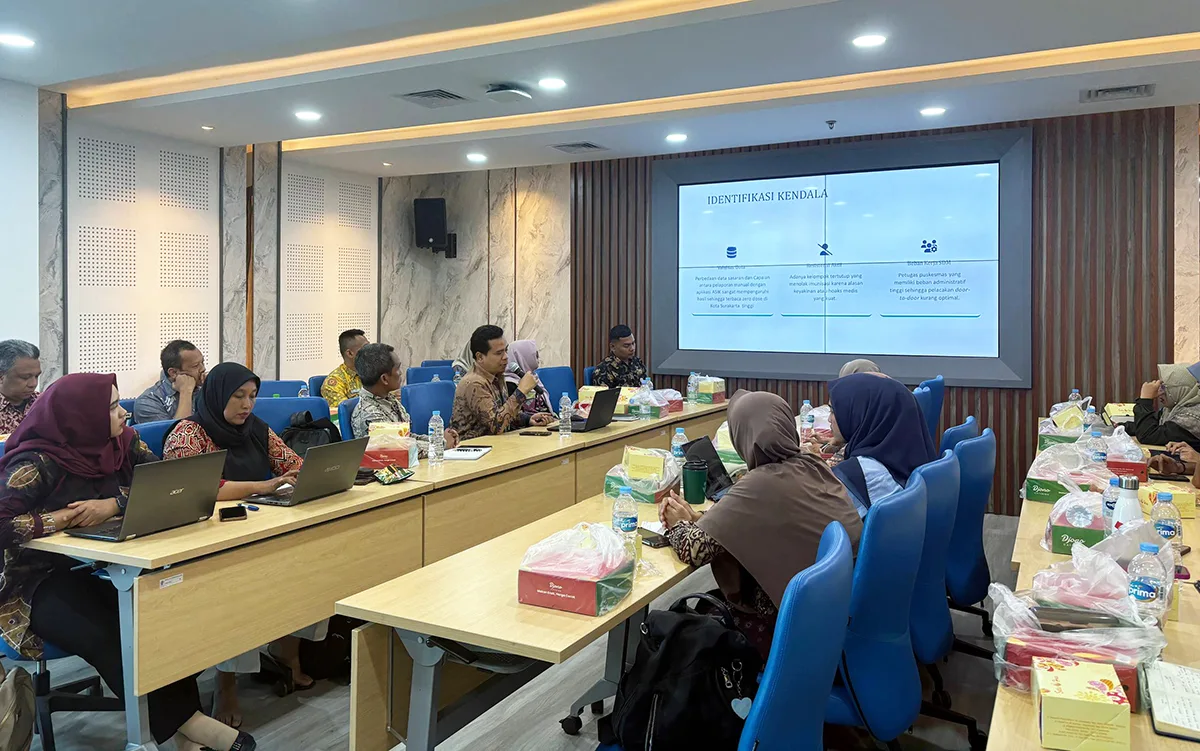


UNDIP, Simeulue (December 5, 2025) – On Monday afternoon, December 1, 2025, Hall I of the Development Planning Agency (Bappeda) of Simeulue Regency was more crowded than usual. Starting at 14.00 WIB, heads of departments, subdistrict leaders, regional planners, and community representatives filled the room to attend the Focus Group Discussion (FGD) on the Final Presentation of the 2025 Patriot Expedition Team of the Ministry of Transmigration.
The activity, officially opened by Simeulue Regent Mohammad Nasrun Mikaris, S.H., M.H., served as a forum for the local government and academics from three universities—Universitas Diponegoro (UNDIP), Institut Pertanian Bogor (IPB), and Universitas Indonesia (UI)—to finalize the evaluation of developments in the Selaut Transmigration Area, which has been built since 2016.
In his remarks, the Regent of Simeulue emphasized the regional government’s commitment to follow up on the Patriot Expedition Team’s field findings.
“These findings are essential as the basis for formulating sectoral policies and inter-agency coordination. The local government is ready to follow up on these recommendations so that the development of the transmigration area can proceed more systematically and sustainably,” said Regent Mohamad Nasrul Mikaris.
On this occasion, the Patriot Expedition Team from Universitas Diponegoro (UNDIP) presented the results of a strategic study on the Selaut Transmigration Area, which, since 2016, has become an important region in Simeulue’s coastal development. UNDIP’s study identifies land consolidation, ecological planning, and basic infrastructure as the foundation of the larger “Complete Transmigration” agenda initiated by the Ministry of Transmigration of the Republic of Indonesia.
Selaut Transmigration Area as an Agro-Maritime Corridor for the West–South Region
In his presentation, the Head of UNDIP’s Patriot Expedition Team, Dr.-Ing. Asnawi Manaf, S.T., emphasized that the Selaut Transmigration Area should no longer be viewed merely as a settlement, but as an agro-maritime corridor connecting agricultural production centers, fisheries, and coconut–spice agroindustry in three main clusters: Sigulai, Lubuk Baik–Lamerem, and Tamon Jaya–Meunafa.
“This area must be developed as an interconnected agro-maritime system. Strengthening land legality, road and port infrastructure, and post-harvest facilities must be designed as a comprehensive policy package,” said Dr. Asnawi.
From a technical standpoint, representatives of Simeulue residents affirmed that the study’s results would be vital for aligning cross-sector development plans, particularly in efforts to enhance the economy and community welfare in Simeulue Regency.
Land Consolidation as a Key to Accelerating the “Complete Transmigration” Program
UNDIP identifies land consolidation as a strategic step to resolve transmigration bottlenecks in Sigulai and its surrounding areas. Through tracing Land Plot Identification Numbers (NIB), HPL–SHM documents, and boundary checks using aerial imagery and the Bhumi ATR/BPN portal, the team found several land-related issues: uncertified plots, overlapping boundaries with roads and public facilities, and plot positions that do not support productive activities.
According to UNDIP, land consolidation is necessary to reorganize plot boundaries, ensure that SHM and HPL documents are legally and spatially structured, provide space for basic infrastructure, and strengthen the economic foundation of transmigrants through more functional spatial planning.
Land consolidation is positioned as a lever for the three pillars of complete transmigration: completed legality, connected basic services, and sustainable livelihoods.
Synergy of Data, Maps, and Community Voices
UNDIP’s study approach does not rely on a single data source but combines spatial data, field verification, and social dialogue. The team began by reviewing digital maps, NIB metadata, aerial photographs, and land documents via the Bhumi ATR/BPN portal. This approach provided an initial overview of spatial configurations, ownership, and potential boundary conflicts.
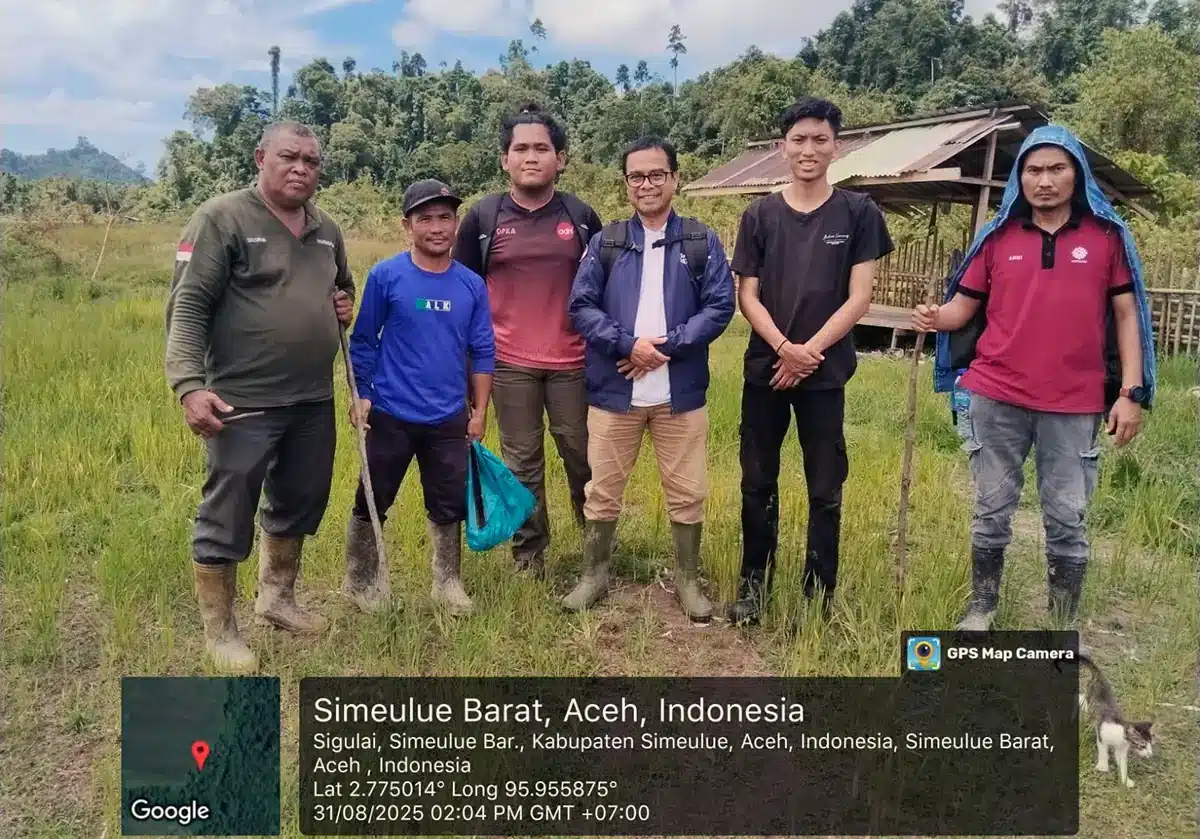
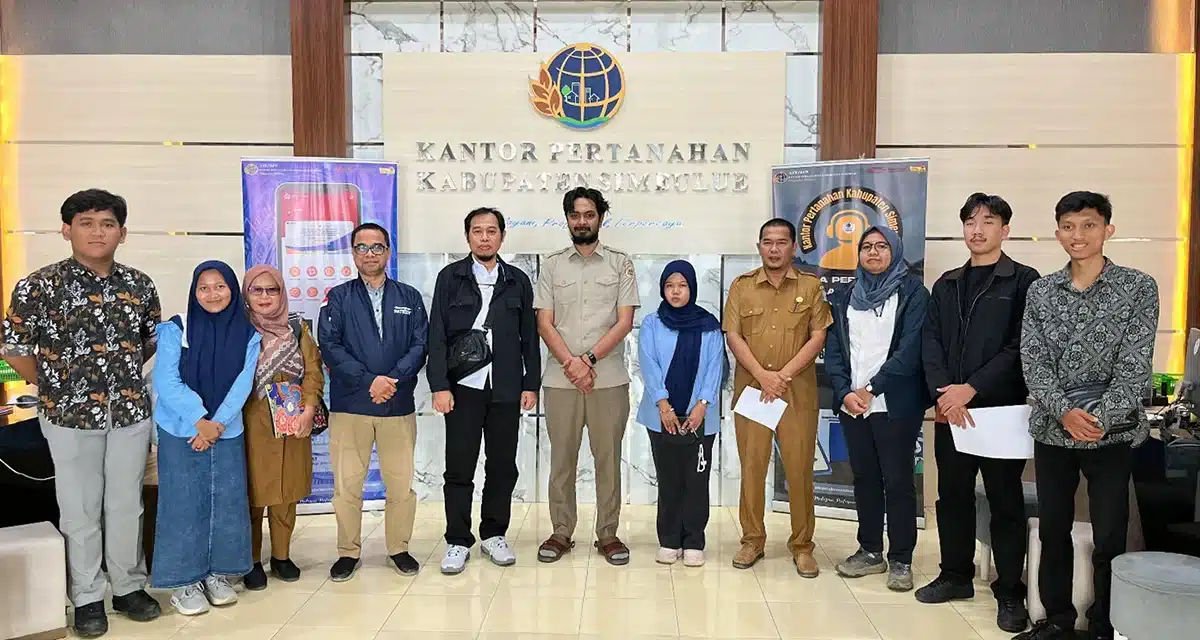
The next phase included in-depth dialogues with transmigrant residents and field observations to understand socio-ecological contexts: how residents access land, use productive spaces, and cope with limited irrigation, farm roads, and access to basic services. These findings were strengthened through technical discussions with the Simeulue Land Office (BPN), which clarified administrative land status, certification procedures, and challenges in accelerating SHM completion.
The process culminated in the FGD at Simeulue Bappeda, where all data were verified collectively. The maps displayed in the forum were an integration of aerial imagery, Bhumi ATR/BPN portal data, field survey coordinates, and social information gathered from village meetings. Thus, the FGD served as the final consolidation space to ensure the accuracy of findings and formulate actionable policy steps.
Strategic Recommendations from UNDIP for the Simeulue Regional Government
Based on its findings, UNDIP proposed several strategic agendas for the local government:
- Completion of land legality (HPL–SHM) through consolidation strategies and comprehensive spatial verification.
- Strengthening the agro-maritime corridor by improving road connectivity, ports, and post-harvest facilities.
- Developing regional economic clusters through the integration of agriculture, fisheries, and agroindustry.
- Strengthening area governance, including options for an HPL management entity and empowering village-owned enterprises (BUMDes).
These steps are expected to transform the Selaut Transmigration Area into a spatially efficient, economically strong, and socially inclusive region.
UNDIP’s Contribution to the SDGs Agenda
Through the 2025 Patriot Expedition, UNDIP affirms the university’s core mission: building impartial knowledge based on data and empirical evidence. This study contributes directly to several Sustainable Development Goals (SDGs), including:
- SDG 1 & 2: poverty alleviation and food security through land certainty and livelihood foundations,
- SDG 9: resilient and connected infrastructure development,
- SDG 14–15: sustainable management of coastal and terrestrial ecosystems,
- SDG 16–17: institutional strengthening and multi-stakeholder partnerships.
Shaping the Future of the Selaut Transmigration Area
The FGD at Bappeda Simeulue affirmed that transmigration area development cannot proceed in a fragmented manner. It requires close collaboration between communities, local governments, and academia. By aligning community aspirations with UNDIP’s scientific analysis, the development direction of the Selaut Transmigration Area now has a stronger, more measurable, and sustainability-oriented foundation.
From Sigulai and the wider Selaut area, the agenda of Complete Transmigration finds a new direction: not merely relocating people, but structuring their living spaces in a fair, legal, and productive manner. (Public Communication/ UNDIP/ Simeulue Patriot Expedition Team, ed. As3)