
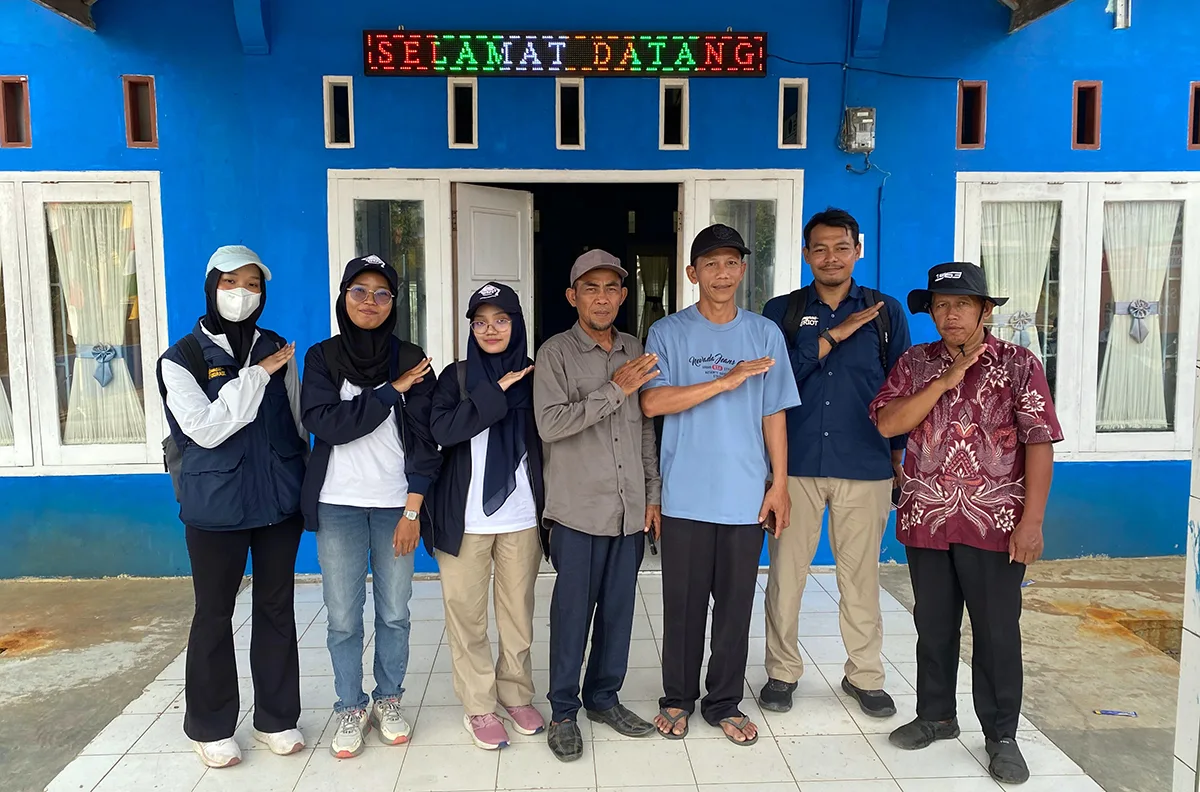
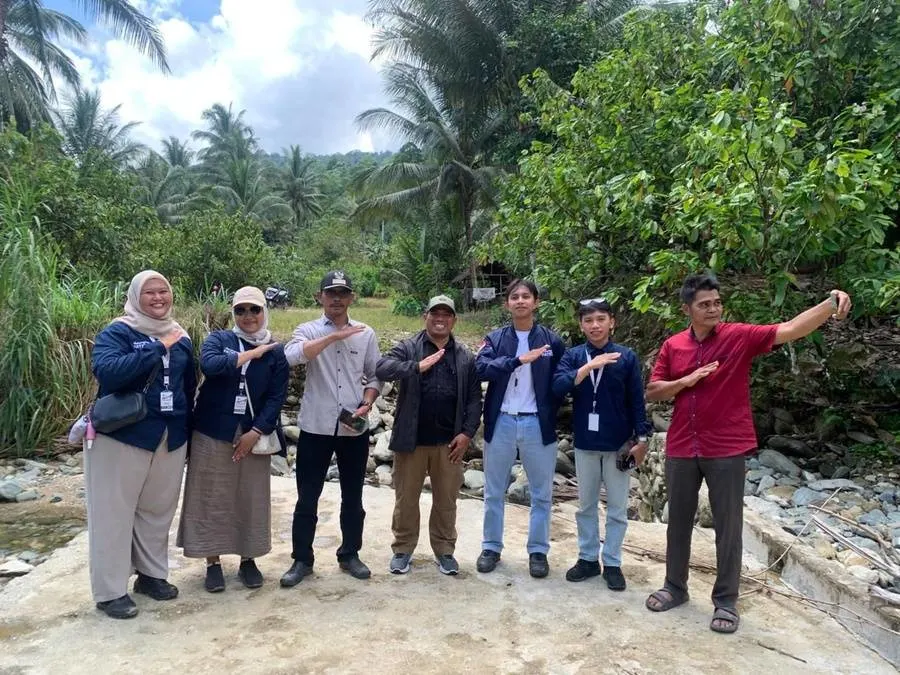
UNDIP, Tolitoli, Central Sulawesi (September 19, 2025) — Team I of the Universitas Diponegoro Patriot Expedition began its mission in the Basidondo Transmigration Area, Tolitoli Regency, Central Sulawesi. Since the early years of Indonesia’s independence, the transmigration program has served as one of the cornerstones of national development, aimed at redistributing population, reducing economic disparities, and opening new lands as centers of production.
Team Composition of Patriot Expedition Team I in Basidondo: Dzul Fahmi Afriyanto, S.KM., M.K.M.; Muhammad Zulfikar; Dasdo Wahyu Saragih, S.PWK.; Wahyu Amara Mahfidarani, S.P.; Dheta Nafisah Hapsari.
In Central Sulawesi, the program established the Basidondo Transmigration Area, encompassing three sub-districts: Basidondo, Lampasio, and Ogodeide. From an once unfamiliar land, transmigrant communities built new villages, shaped livelihoods, and nurtured hope in their new homeland. Nevertheless, development in this area still faces many challenges, particularly in basic infrastructure, economic growth, and fulfillment of community needs.
Communities of diverse ethnic backgrounds inhabit the Basidondo Transmigration Area. Most transmigrants originate from Javanese, Balinese, Sundanese, and Nusa Tenggara ethnic groups, predominantly Javanese and Balinese, living alongside local communities from Bugis, Mandar, Dondo, Tolitoli, Kaili, Mori, Buol, and Bajo.
From these encounters, a close-knit social life has emerged, in which communities work hand in hand to build villages and manage land to foster stable, sustainable economic development. Today, differences in origin no longer serve as barriers but as unifying strengths, in line with Tolitoli Regency’s motto: “Salam Gotong Royong.”
Infrastructure and Socioeconomic Observations
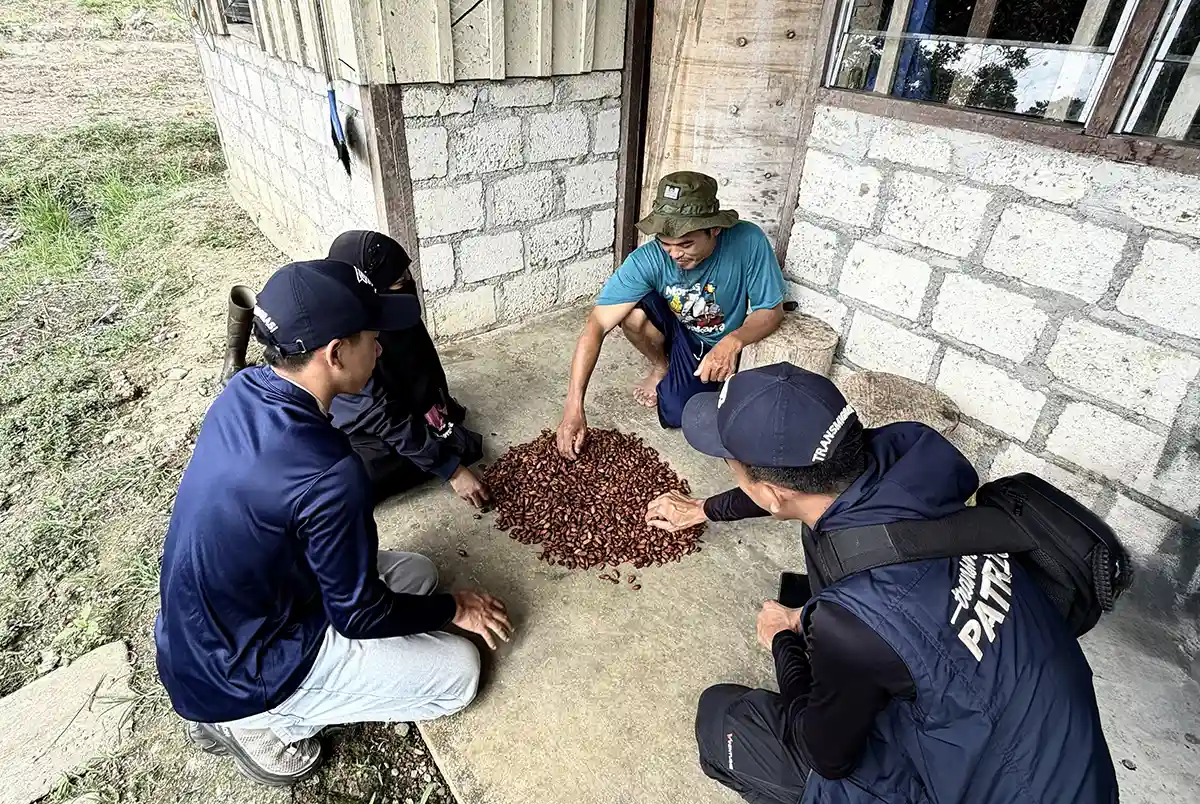
As part of its service and research mission, Team I of the UNDIP Patriot Expedition conducted interviews and direct observations of infrastructure and socioeconomic conditions in the Basidondo Transmigration Area. These activities aimed to understand the pulse of community life, ranging from road and bridge conditions and access to clean water to livelihood patterns that sustain daily life.
The team assessed how communities cope with limitations in socio-cultural aspects, environmental health, education, and untapped economic potential. By collaborating with village governments, sub-district authorities, and local communities, the team identified challenges and local potentials. Community aspirations were collected through a participatory approach—not merely to record concerns, but to pursue concrete follow-up actions.
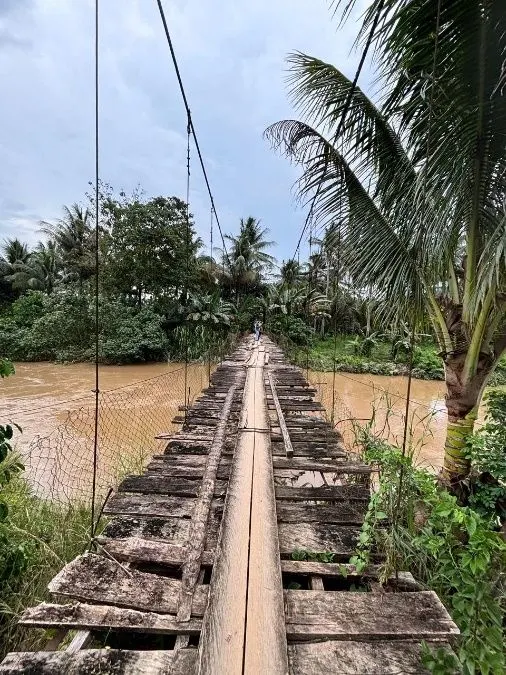
Field findings revealed that much of the existing infrastructure remains in severely inadequate condition. These include damaged road access, deteriorated suspension bridges that serve as vital links to residential areas and agricultural production centers—many of which are nearly collapsing—and insufficient community facilities within the transmigration area.
Despite the dangers, residents continue to use these routes because there are no alternatives. Another bridge connecting two villages and serving as an administrative hub has collapsed, forcing residents to take detours of up to one hour. Access to clean water and electricity is also uneven; some hamlets in Basidondo Sub-district still lack these basic services, further burdening daily life. One resident remarked bitterly, “How can the community’s economy grow if even the roads are barely passable? If that bridge were connected, farmers could easily transport their harvest to market.”
On the other hand, field data indicate that most residents rely on agriculture and plantations, with leading commodities such as cocoa, coconut, cloves, citrus, coffee, corn, and oil palm. However, due to limited distribution infrastructure, these harvests have yet to generate optimal added value.
Patriot Expedition Team Recommendations
In response to these conditions, the UNDIP Patriot Expedition Team formulated several recommendations. First, prioritizing infrastructure funding, including road repairs and paving, renovation of main suspension bridges, reconstruction of collapsed bridges, and accelerated distribution of clean water and electricity facilities to underserved hamlets.
Second, mapping and strengthening leading commodities through more detailed data collection and improved market access, accompanied by agricultural processing training to enhance competitiveness. Third, comprehensive documentation of main community occupations and economic diversification through additional skills training to create new business opportunities beyond agriculture.
A Basidondo Sub-district official stated, “Tolitoli Regency, especially the Basidondo Transmigration Area, is strategically located for regional economic development because of its proximity to the new national capital, making it well positioned to support and market plantation and agricultural products.”
This expedition underscores that transmigration area development should not be viewed merely as population redistribution, but as a sustainable responsibility supported by adequate infrastructure, strengthened leading commodities, and diversified livelihoods.
These efforts align with the Sustainable Development Goals (SDGs), including poverty eradication (SDG 1), food security (SDG 2), access to clean water and energy (SDGs 6 and 7), economic growth and infrastructure improvement (SDGs 8 and 9), sustainable settlements (SDG 11), and strengthened partnerships among communities, government, and universities (SDG 17). The program also reflects the spirit of ‘Noble and Valuable UNDIP’ and delivers tangible impact for Indonesian society.
The resulting recommendations should receive serious attention from local and central governments. With concrete action, the Basidondo Transmigration Area can not only endure but also grow into a model of advanced, impactful, and exemplary development for Central Sulawesi. (Public Communication/UNDIP/Patriot Expedition Team/Ed. Nurul)