
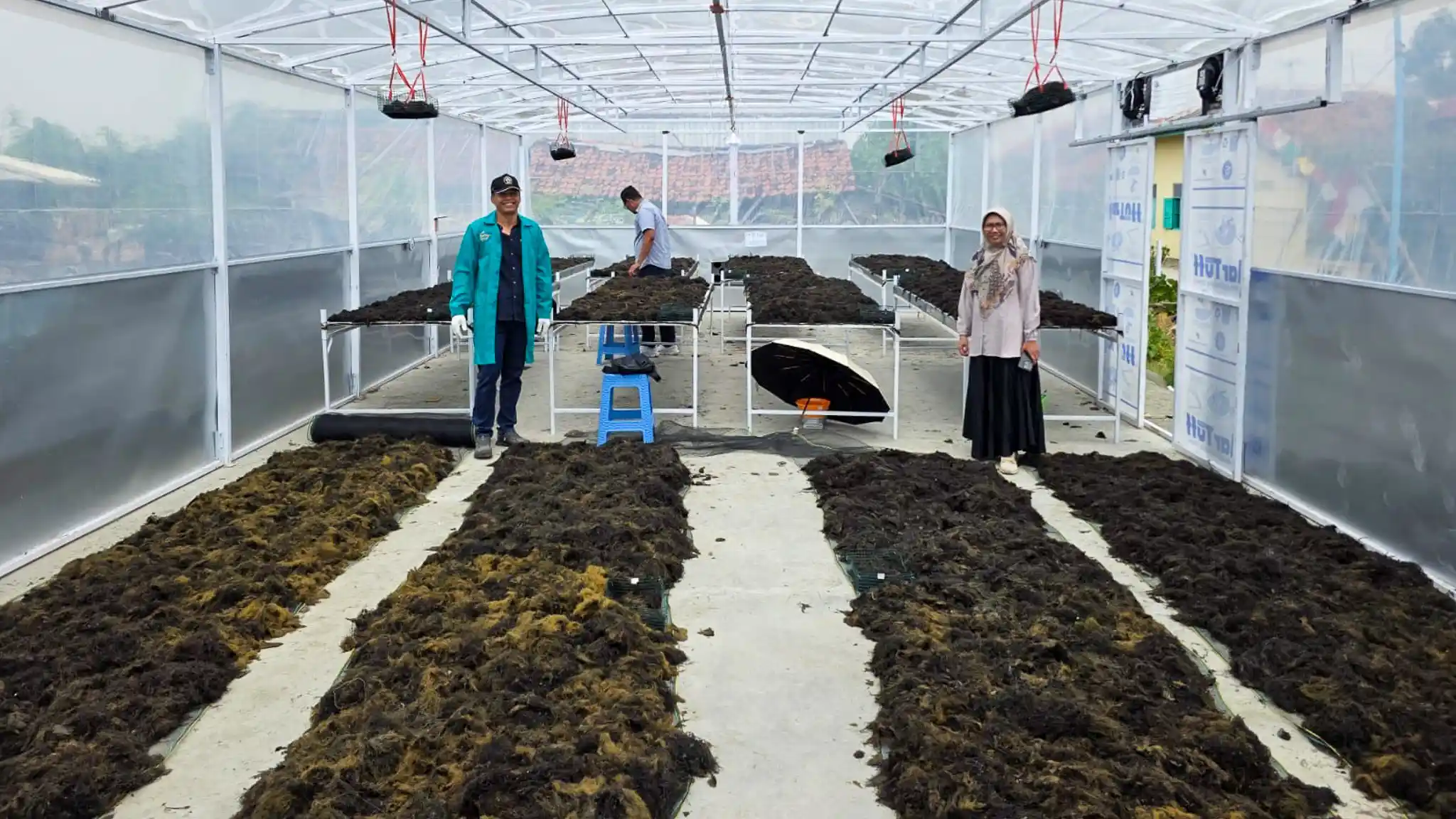
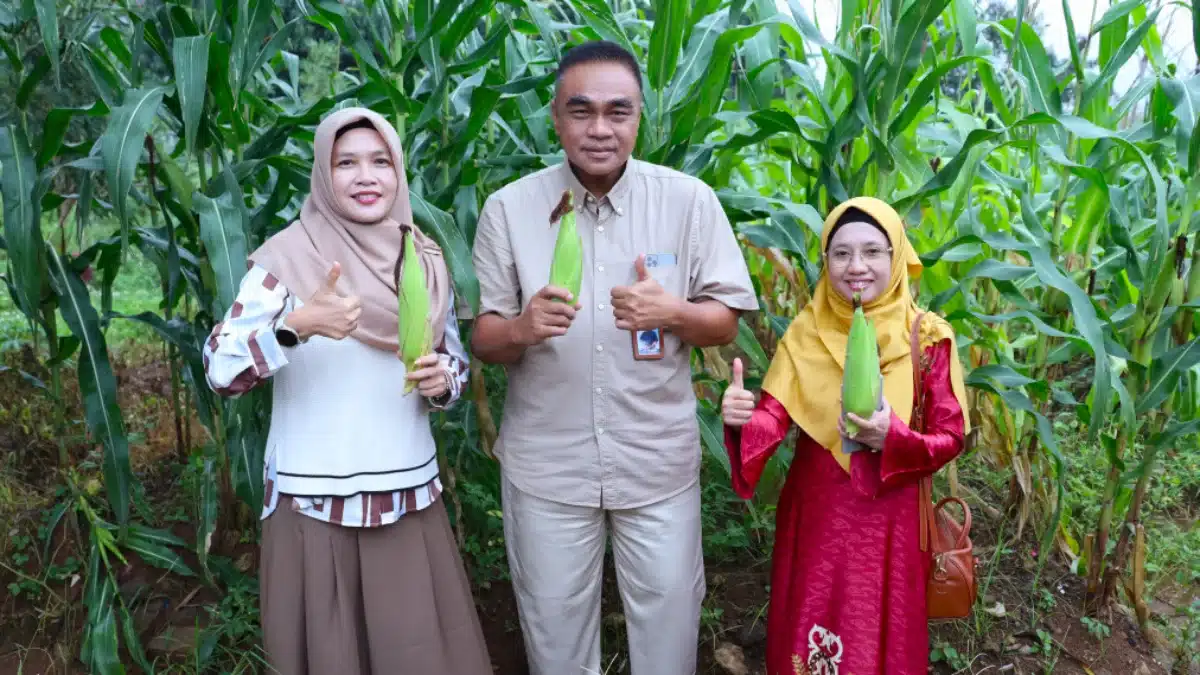
UNDIP, Semarang (10/2) – The UNDIP Occupational Safety, Health, and Environment Unit (UPT K3L), together with Dharma Wanita Persatuan Universitas Diponegoro (DWP UNDIP), conducted an organic corn harvest on Monday, February 10, 2026, at the Integrated Waste Management Facility (TPST) of the UNDIP Tembalang Campus. The harvested corn was managed using a circular waste management approach, as it was cultivated with compost fertilizer produced from processed organic waste, to reduce waste while generating environmentally friendly agricultural products.
Previously, in conjunction with its 68th Anniversary celebration, Universitas Diponegoro officially launched the “UNDIP Zero Waste” movement at the Integrated Waste Management Facility (TPST) of the UNDIP Tembalang Campus. This initiative marked the university’s concrete step toward building a clean, healthy, environmentally friendly, and sustainable campus ecosystem in line with the spirit of Noble and Valuable UNDIP, while also supporting the national program Diktisaintek Berdampak.
The launch of UNDIP Zero Waste is a follow-up to Rector Regulation Number 5 of 2023 concerning Waste Management within UNDIP, which emphasizes the implementation of the 5R principles (Refuse, Reduce, Reuse/Repair, Recycle, and Rot) in all academic, research, educational, and service activities.
The utilization of organic waste begins with sorting and processing it into compost. The compost is then used as the main fertilizer for corn cultivation, creating a sustainable cycle that transforms waste into productive resources.
UNDIP Vice Rector for Planning, Finance, Assets, Business, and Administration, Dr. Warsito Kawedar, S.E., M.Si., Akt., stated that the organic corn harvest demonstrates that TPST UNDIP’s waste management can deliver tangible environmental and societal benefits. “Through a circular economy approach, organic waste does not end as waste but is processed into fertilizer that supports sustainable agriculture,” he explained.
The harvested organic corn is of good quality and is produced without synthetic chemical fertilizers. The campus community can enjoy the corn harvest and also serve as a practical learning medium for UNDIP students focusing on agriculture, economics, and processing technology.
In the future, UNDIP will continue to develop the program and expand the variety of crops by involving more researchers and students. These efforts are expected to strengthen sustainable waste management and support food security and environmental conservation. (Public Communication/UNDIP/Ut)