

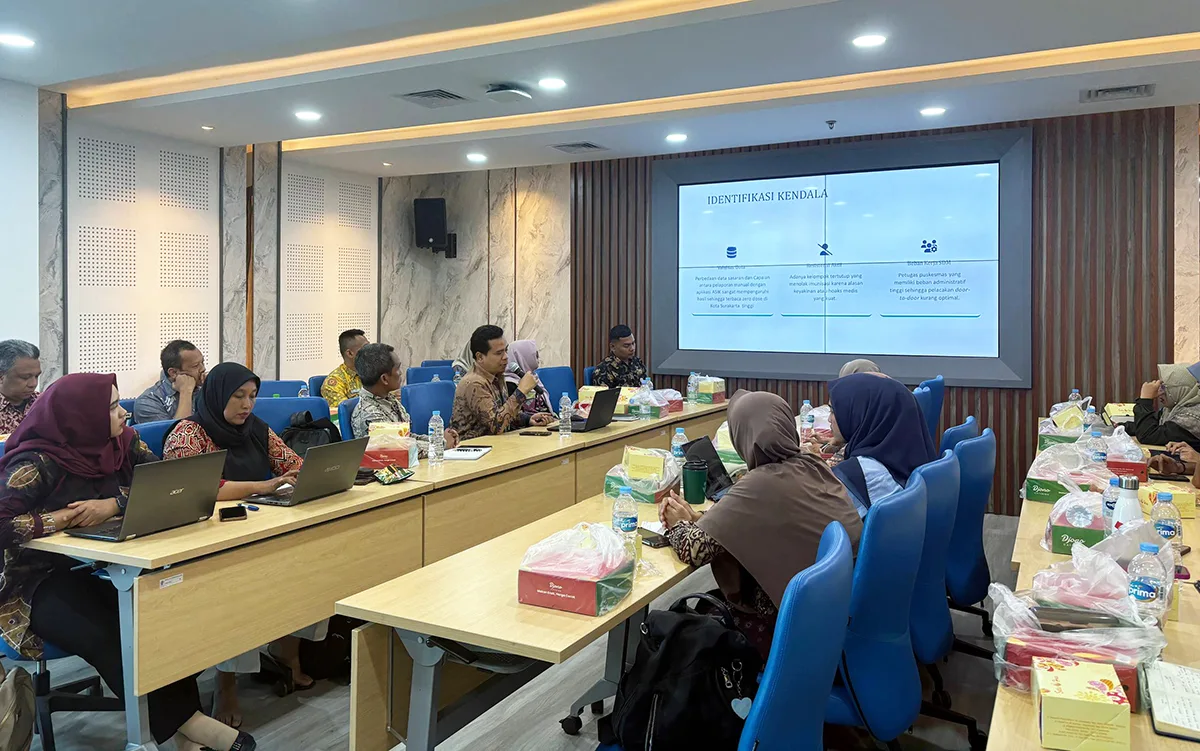


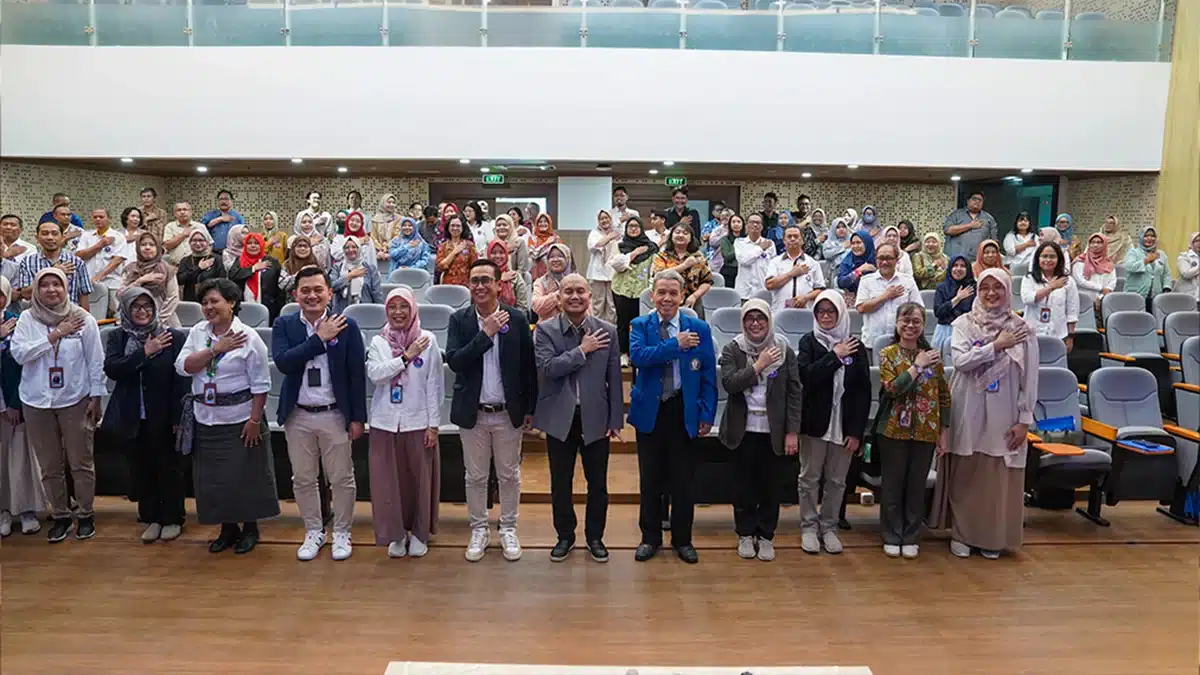
UNDIP, Semarang (9/3) – Universitas Diponegoro (UNDIP), through the Consultation, Disability, Discipline Enforcement, and Student Ethics Service Unit (UPT LKDPDEM), organized aTraining Program to Strengthen the Role of Disability Companions. The event was held on Monday, March 9, 2026, from 1:00 PM to 4:30 PM at the ICT Center Building, 5th Floor, UNDIP Tembalang Campus.
The training was attended by the Vice Rector for Academic and Student Affairs, Prof. Dr.rer.nat. Ir. Heru Susanto, S.T., M.M., M.T., representatives from the Directorate of Student Affairs and Alumni, leaders of UPT LKDPDEM, faculty and school leaders within UNDIP, as well as training participants consisting of lecturers and education staff across the university.
Carrying the tagline “UNDIP Inclusive Campus,” the program aims to enhance lecturers’ and educational staff’s understanding and competencies in providing appropriate services and support to students with disabilities, particularly those with mental disabilities.
In his opening remarks, Prof. Heru Susanto emphasized that providing services and support to students with disabilities is the university’s responsibility. “Whether we like it or not, as an institution, we must provide services and assistance to students with disabilities. Currently, the most common cases involve mental disabilities, many of which may still be undetected,” he said.
He illustrated the importance of proper support with an example:
“There is a Chemistry student who, when asked about the subject they fear the most, answered Chemistry or science. This answer is unusual. That is why mental support and assistance are necessary,” he added.
The event featured two speakers. They were: Costrie Ganes Widayanti, S.Psi., M.Si.Med., Ph.D., who delivered material on “Inclusive Service Strategies for Students with Disabilities.” The following speaker was dr. Fanti Saktini, M.Si.Med., Sp.K.J., AHK, who presented on “Assistance for Students with Mental Disabilities.”
Costrie explained that students with disabilities need special attention while still receiving equal rights in accessing educational services.
“Students with disabilities may be seated at the front of the class so that lecturers can monitor them more easily,” she explained.
In the following session, dr. Fanti Saktini discussed how educators can assist students experiencing mental disabilities by showing empathy and engaging them in private conversations. This approach allows students to share the challenges they face so that their mental health issues can be addressed promptly.
“We must show empathy by inviting them to talk privately so their problems can be properly understood and handled,” concluded dr. Fanti. (Public Communication/UNDIP/AKS ed. As3)