




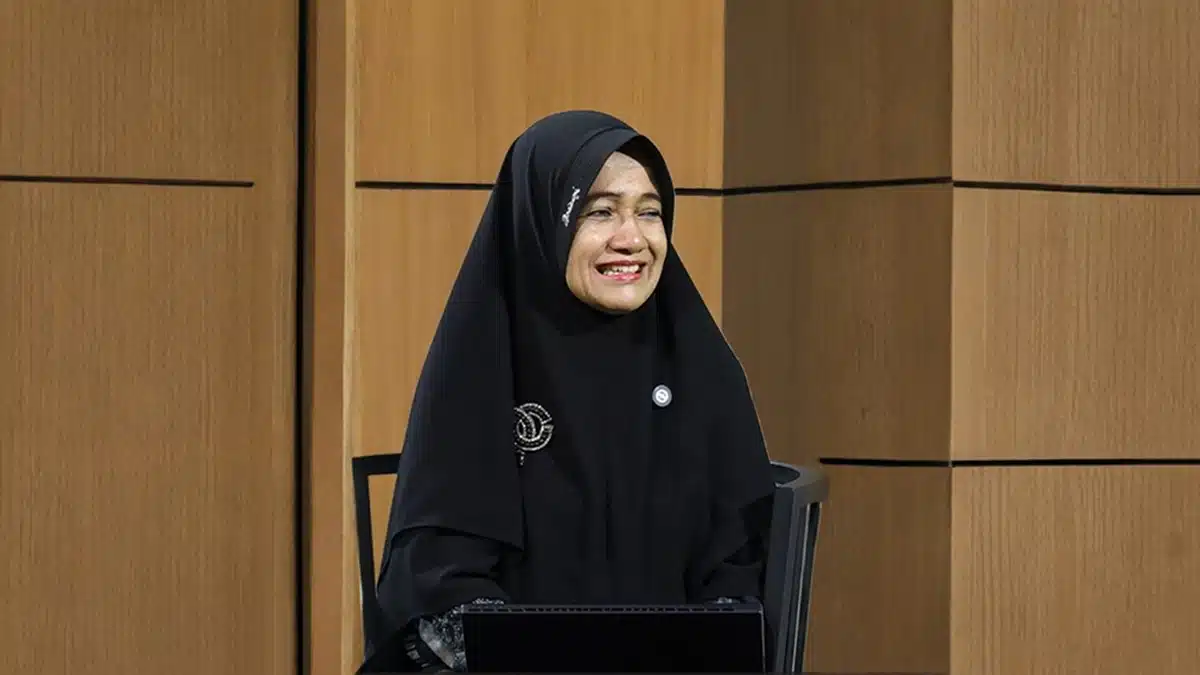
UNDIP, Semarang (18/3) – Dra. Darosy Endah Hyoscyamina, M.Pd., affectionately known as Bunda Darosy, is a lecturer at the Faculty of Psychology, Universitas Diponegoro (UNDIP), specializing in Family Education and Islamic Character Building.
Beyond her academic role, Bunda Darosy is also actively engaged in da’wah (Islamic preaching) alongside her family. The values she teaches are not only conceptual but also put into practice in daily life, as reflected in her family’s example.
Her dedication has earned her several national recognitions, including “Outstanding Family at the National Level” (2005) and “National Preaching Family” (2007). Additionally, her involvement in the “Dari Keluarga dengan Cinta untuk Indonesia” program (From Family with Love for Indonesia) received recognition from Dompet Dhuafa and Republika, awarding her the title of “Inspirational Community Figure” (2011), as well as recognition from the Vice Governor of Central Java, Rustriningsih.
Her influence has also reached the public sphere through various media programs such as “Klinik Sakinah” and “Rumahku Surgaku”, which consistently educate the public on the importance of building harmonious families. Due to her dedication, she has been invited to speak at state-level forums in the presence of President Susilo Bambang Yudhoyono (SBY) and Vice President Jusuf Kalla (JK), including national events at the State Palace, demonstrating her impact at both the local and national levels.
In a podcast session with UNDIP TV titled “Elevating Ramadan by Nurturing the Heart and Self,” Bunda Darosy explained that Ramadan is a month filled with special virtues.
“Ramadan is a very special month. It contains the Night of Lailatul Qadr, whose rewards are greater than a thousand months—equivalent to more than 83 years. During this month, the gates of Hell are closed, the gates of Heaven are opened, and we receive mercy, blessings, and forgiveness from Allah,” she explained.
She further emphasized that fasting, as commanded in Surah Al-Baqarah verse 183, should not be limited to abstaining from food and drink. Many people still engage in negative behaviors such as gossiping, harsh speech, and anger, which indicates that the heart has not been properly nurtured. As a result, fasting becomes merely a physical act of hunger and thirst. Therefore, she stressed the importance of disciplining the heart and self so that the heart becomes spiritually healthy, fostering enthusiasm for both obligatory and voluntary worship, sharpening one’s thinking, and enabling the ability to distinguish between right and wrong. “That is why the key is to guard the heart and nurture the self,” she stated.
Bunda Darosy also shared practical guidance on healing a troubled heart. Referring to the well-known Islamic song “Obat Hati” (Remedy for the Heart), she outlined five key practices: reading and understanding the Qur’an, performing night prayers, associating with righteous people, increasing fasting, and extending night remembrance (dhikr). “All of these, InsyaAllah, can be practiced if we are committed to learning and deepening our religious knowledge,” she concluded. (Public Communication/UNDIP/AKS)