
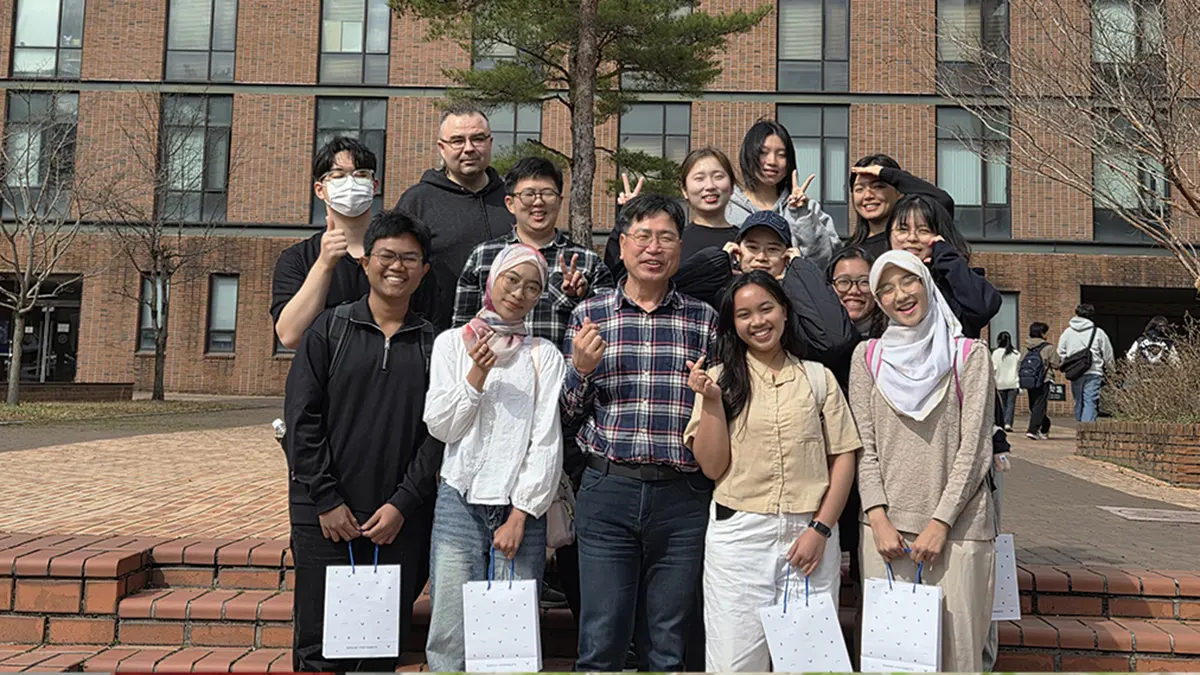
UNDIP, South Korea (11/4) – Five students from the Faculty of Public Health, Universitas Diponegoro (UNDIP), had the opportunity to study directly at Yonsei University, South Korea, through a one-month exchange program held from March 2 to April 1, 2026. This activity is part of the Enhancing Quality Education for International University Recognition (EQUITY Project), supported by the Higher Education Endowment Fund (DAPT) and implemented through the Inbound Student Internship (outbound) scheme as an effort to promote campus internationalization.
The program was attended by five students: four undergraduate Public Health students and one master’s student in Epidemiology, Surya Natanegara, Mutiara Rizqi Yuwanita, Ajeng Dwi Wusono, Nabila Gusvie Qanita, and Angela Pricillia Helen. After undergoing a selection process, they were chosen to participate in the program and engage in intensive learning at Yonsei University for one month.
During their time at Yonsei University, the students participated in a series of activities combining theory and laboratory practice in the fields of epidemiology, molecular entomology, and molecular infectious diseases. The program included lectures, introductions to laboratory facilities, and hands-on training that provided direct experience with various molecular research techniques, ranging from the application of Good Laboratory Practice (GLP) to DNA extraction and amplification, to diagnostic methods such as PCR, qPCR, and RT-PCR. In addition, participants were introduced to sequencing technologies, including Sanger sequencing and Next-Generation Sequencing, and their applications for detecting pathogens such as African Swine Fever Virus (ASFV) and Coxiella burnetii.
The learning experience was further enhanced by access to Yonsei University’s comprehensive and modern laboratory facilities. Exposure to globally standardized research technologies and infrastructure provided students with valuable opportunities to deepen their understanding and broaden their perspectives on international research practices.
Through this program, students not only gained technical skills but also expanded their insights into global research developments. This experience is expected to serve as a foundation for advancing knowledge within Universitas Diponegoro’s academic environment and to contribute to the development of public health research in Indonesia, particularly in the fields of infectious and molecular diseases. It also reinforces UNDIP’s commitment to producing graduates who are ready to compete on the global stage. (Public Communication/UNDIP/FKM)