










UNDIP, Semarang (13/7) – Advances in genetics are no longer limited to the study of inherited traits. Genetics has become an important foundation for understanding the mechanisms of the human body, detecting disease risks at an early stage, and determining more appropriate preventive measures and treatments tailored to each individual. Amid this transformation, Universitas Diponegoro (UNDIP) is taking an active role through genetics-based research, innovation, and healthcare services.
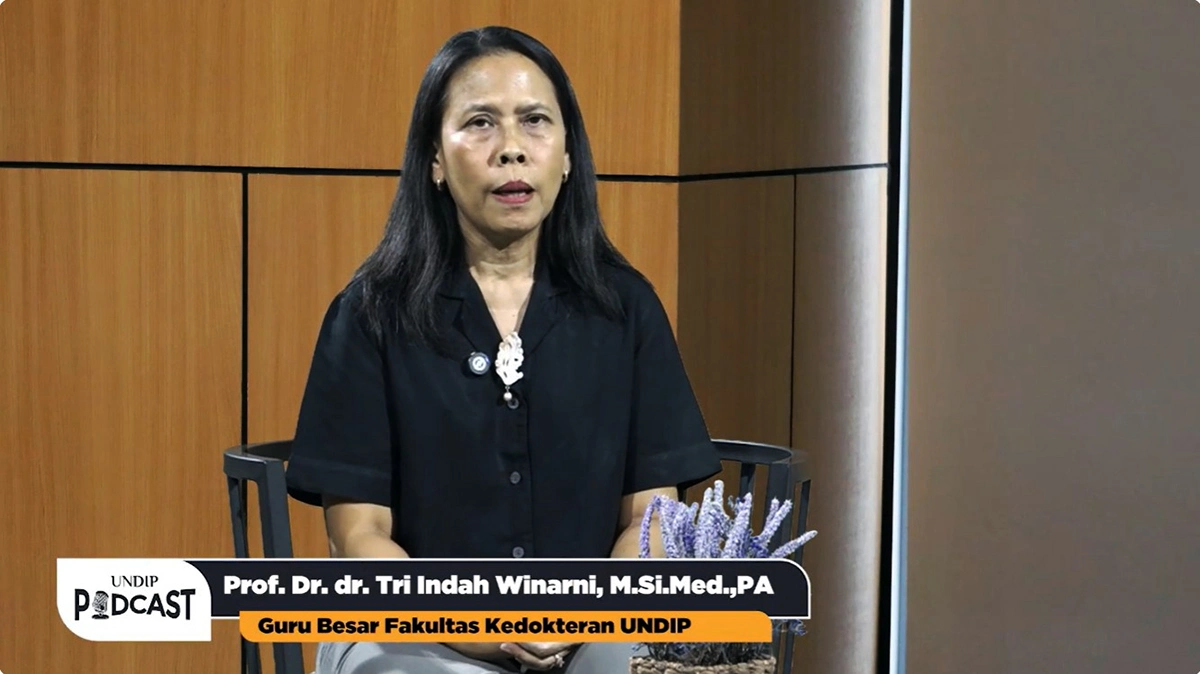
In an insightful discussion with UNDIP Faculty of Medicine genetics expert Prof. Dr. dr. Tri Indah Winarni, M.Si.Med., PAK(K), it was revealed how genetics is increasingly becoming key to improving people’s quality of life. She explained that the human body functions through genetic information stored in every cell. This information serves as a kind of blueprint that regulates various bodily functions, including protein production, responses to disease, and mechanisms for maintaining the body’s balance.
“Genetics helps us understand why someone can become ill, how a disease develops, and what can be done to prevent it from the outset,” explained Prof. Tri Indah, affectionately known as Prof. Iin. She likened Deoxyribonucleic acid (DNA) to a control center that regulates the body’s needs, including the production of proteins that help maintain health.
UNDIP’s contribution to the development of genetics has been underway for many years. In 2007, the UNDIP Faculty of Medicine pioneered Indonesia’s first Master’s Program in Genetic Counseling, producing professional genetic counselors who help patients gain a comprehensive understanding of genetic risks before making medical decisions. This pioneering initiative was closely associated with Prof. dr. Sultana M.H. Faradz, Ph.D., an UNDIP professor who, since 2004, has been a key figure in establishing the foundations of genetics as a field of study in Indonesia.
Prof. Iin emphasized the importance of genetic counselors in supporting patients who are about to undergo genetic testing. Such counseling helps patients understand the benefits, risks, options, and consequences of the tests being performed. “Genetics is not an easy field, but it becomes easier to understand when a counselor supports patients. Counselors serve as educators and companions, while also playing an important role in patient safety,” she explained.
UNDIP has also played a role in revitalizing the national professional genetics organization, now known as the Indonesian Society of Human Genetics (InaSHG). Since 2014, the organization has served as a collaborative platform for academics, researchers, and practitioners working in human genetics, bringing together hundreds of members across Indonesia to advance research and genomic-based healthcare services.
In healthcare services and research, the UNDIP Faculty of Medicine continues to strengthen its facilities, infrastructure, and genetics research centers. UNDIP has a cytogenetics laboratory for chromosome abnormality testing, molecular testing facilities, and research centers, including the Community Genetic Research Center. In addition, the Diponegoro National Hospital (RSND) has operated a Genetic Clinic since February 2024, providing consultation services to the public and patients requiring further assistance.
These services are particularly important for patients with suspected genetic disorders, syndromic conditions, and Differences of Sex Development (DSD), including the use of advanced software-based methods such as Face2Gene, as well as cases requiring chromosomal and molecular investigations. Through this approach, patients and their families receive not only medical examinations but also more comprehensive, compassionate, and science-based explanations.
Prof. Iin further emphasized the importance of understanding genetic diseases and early detection, particularly for multifactorial diseases such as diabetes mellitus, hypertension, cholesterol disorders, heart disease, stroke, and cancer, which can arise from a combination of genetic and environmental factors.
“If we know early on, we can take preventive measures. Many diseases can be controlled so that patients can maintain a good quality of life,” Prof. Iin said.
Screening programs are also receiving increasing attention, including newborn screening, which the government is now implementing to detect certain genetic diseases at an early stage. Another important issue discussed was genetic testing to identify cancer risk, commonly known as a cancer panel. Such testing has significant potential to identify cancer risks in individuals with a family history of cancer before symptoms appear, allowing treatment and preventive measures to be implemented more effectively.
Prof. Iin believes that preventive strategies of this kind need to be further strengthened in Indonesia. In addition to improving patients’ chances of successful treatment, early prevention can help reduce the long-term burden of healthcare costs. Earlier testing may prevent patients from seeking treatment only after their condition has become severe, when treatment is more complex, and healthcare costs are considerably higher.
UNDIP is active not only in academia and healthcare services but also in expanding public education on genetics. Through the Community Genetic Research Center (https://www.instagram.com/comgenrc.undip/), established in 2022, the UNDIP Faculty of Medicine develops various educational programs, including digital content covering genetic diseases, multifactorial diseases, cancer, diabetes, and the importance of lifestyle modifications.
Public education is essential because genetics is often perceived as complicated and disconnected from everyday life. In reality, a basic understanding of family medical history, lifestyle patterns, and the importance of early testing can help people make better-informed healthcare decisions.
For Prof. Iin, the future of medicine in Indonesia requires more healthcare professionals who understand genetics. Moreover, the government, through the Ministry of Health, has initiated the Biomedical and Genome Science Initiative (BGSI), opening significant opportunities for the development of precision medicine in Indonesia. “Doctors throughout Indonesia need to start looking more closely at genetics. It will be an important part of the future of healthcare services,” she said.
Through research, education, healthcare services, and collaboration, UNDIP continues to develop genetics as an important foundation for improving public health. Genetics is no longer merely an academic field but has become a pathway toward healthcare services that are more accurate, preventive, and oriented toward individual needs. In the spirit of “Noble and Valuable UNDIP”, the strengthening of genetics at the UNDIP Faculty of Medicine represents a tangible contribution to addressing future healthcare challenges by connecting knowledge, innovation, and human values to improve quality of life.
The full discussion can be viewed through the official UNDIPTV YouTube channel. (Public Communication/UNDIP/DHW)