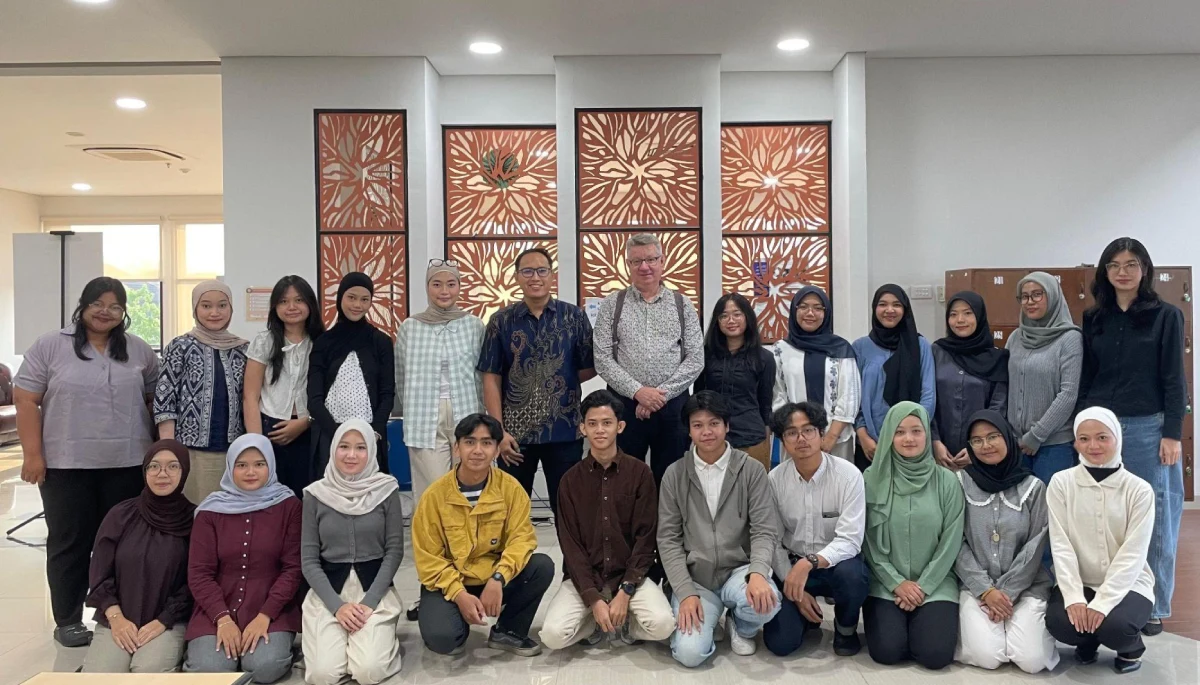


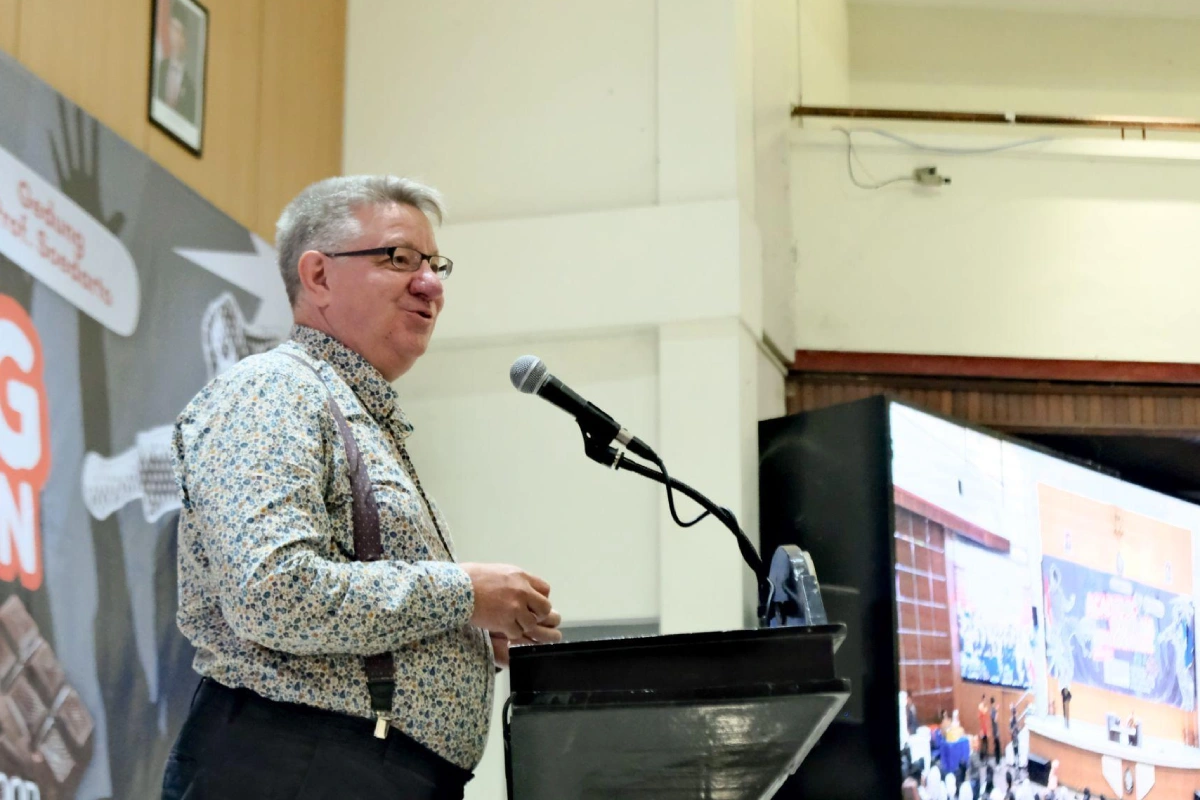
UNDIP, Semarang (9/9) – Universitas Diponegoro (UNDIP) strengthened its international research collaboration in lipid science and food innovation through a visit by Prof. Michael Rappolt, a lipid biophysics expert from the University of Leeds, United Kingdom, from September 2–9, 2026. The visit provided an opportunity for Prof. Michael to discuss and exchange knowledge with Yoga Pratama, S.T.P., M.Sc., Ph.D., a lecturer in Food Technology at UNDIP and a research colleague in lipid-related studies.
Several collaborative research topics were discussed, including the use of mango kernel butter as an alternative to cocoa butter, the exploration of lipids from edible insects as alternative fat sources, and the development of food products based on local goat milk fat. Through this collaboration, UNDIP seeks to expand its international academic network while encouraging the development of innovative and sustainability-oriented food research.
Prof. Michael explained that “the development of alternative lipids is becoming an increasingly active field of research due to climate change issues, which are encouraging researchers to seek more sustainable lipid sources.” In addition to exploring raw materials, it is also important to understand the structural and physicochemical characteristics of lipids, as these properties determine their function in food products.
In this regard, Prof. Michael also supports the research by providing access to and use of globally standardized characterization instruments, including X-ray Diffraction (XRD). This approach provides a foundation for developing alternative materials that are not only sustainably available, but also possess characteristics suited to their intended applications.
Mango Kernel Butter as an Alternative to Cocoa Butter
One of the studies currently being developed is the utilization of mango kernel butter, a fat derived from mango seed kernels, as an alternative to cocoa butter. Cocoa butter is an important component in chocolate products, playing a major role in determining texture, melting behavior, and sensory experience during consumption. Meanwhile, mango seed kernels have the potential to be utilized as an alternative lipid source that can be further developed through modification of their physical and chemical characteristics. “One approach that can be used to modify its characteristics is enzymatic interesterification,” said Dr. Yoga.
Enzymatic interesterification can modify the arrangement of fatty acids in triacylglycerol molecules, allowing the development of specific lipid characteristics. Prof. Michael explained that “mango kernel butter has physical characteristics, particularly its crystalline phase, that are quite similar to the crystalline phase of cocoa butter.” Through this approach, mango kernel butter has the potential to be developed as an alternative ingredient.
Edible Insect Lipids: Potential Alternative Fat Sources from Indonesia
In addition to using mango seed kernels, Prof. Michael and Dr. Yoga are collaborating to explore alternative lipid sources derived from edible insects. As a tropical country, Indonesia has significant potential for the development and cultivation of edible insects as alternative protein sources, while also providing lipid resources that can be further explored.
Dr. Yoga explained that “the potential of edible insects in Indonesia can still be developed much more extensively, particularly through exploration of their lipid content as an alternative fat source with potential applications in the food industry.” Insects such as black soldier fly larvae and superworms contain high levels of fat, making them of great interest for further exploration. The research is expected to create opportunities to diversify alternative lipid sources while encouraging the use of local resources through a more sustainable approach.
Development of Food Products Based on Local Goat Milk Fat
The development of food products based on local goat milk fat is another focus of the research collaboration, with the aim of exploring the potential of local raw materials. Goat breeds with strong milk production potential include Sapera, Etawa, Jawa Randu, and Anglo-Nubian. As one of the main components of milk, fat plays an important role in determining the physical and sensory characteristics of food products, including texture, flavor, and mouthfeel. “The utilization of goat milk fat presents an opportunity to develop food products with distinctive characteristics while increasing the added value of livestock commodities,” said Dr. Yoga.
Research findings indicate that the Jawa Randu breed has the highest fat content and butter yield. This finding provides a basis for further exploration of goat milk fat through lipid characterization and the development of its applications in various food products. Through the collaboration between Prof. Michael and Dr. Yoga, the development of local goat milk fat is expected to generate innovations that combine the potential of local raw materials with deeper scientific approaches.
The collaboration between UNDIP and the University of Leeds is expected not only to strengthen knowledge exchange among researchers, but also to open opportunities for further research development, international scientific publications, and improved student competencies in lipid science and food technology. The exploration of alternative lipid sources from local agricultural and livestock commodities can become part of efforts to develop food innovations that are adaptive to future challenges.
Through international collaboration and strengthened research capacity, UNDIP continues to foster innovations that uphold integrity, are globally competitive, and deliver tangible benefits to society. This initiative also supports the achievement of the Sustainable Development Goals (SDGs), particularly SDG 9: Industry, Innovation and Infrastructure, SDG 12: Responsible Consumption and Production, SDG 13: Climate Action, and SDG 17: Partnerships for the Goals. (Public Communication/UNDIP)