






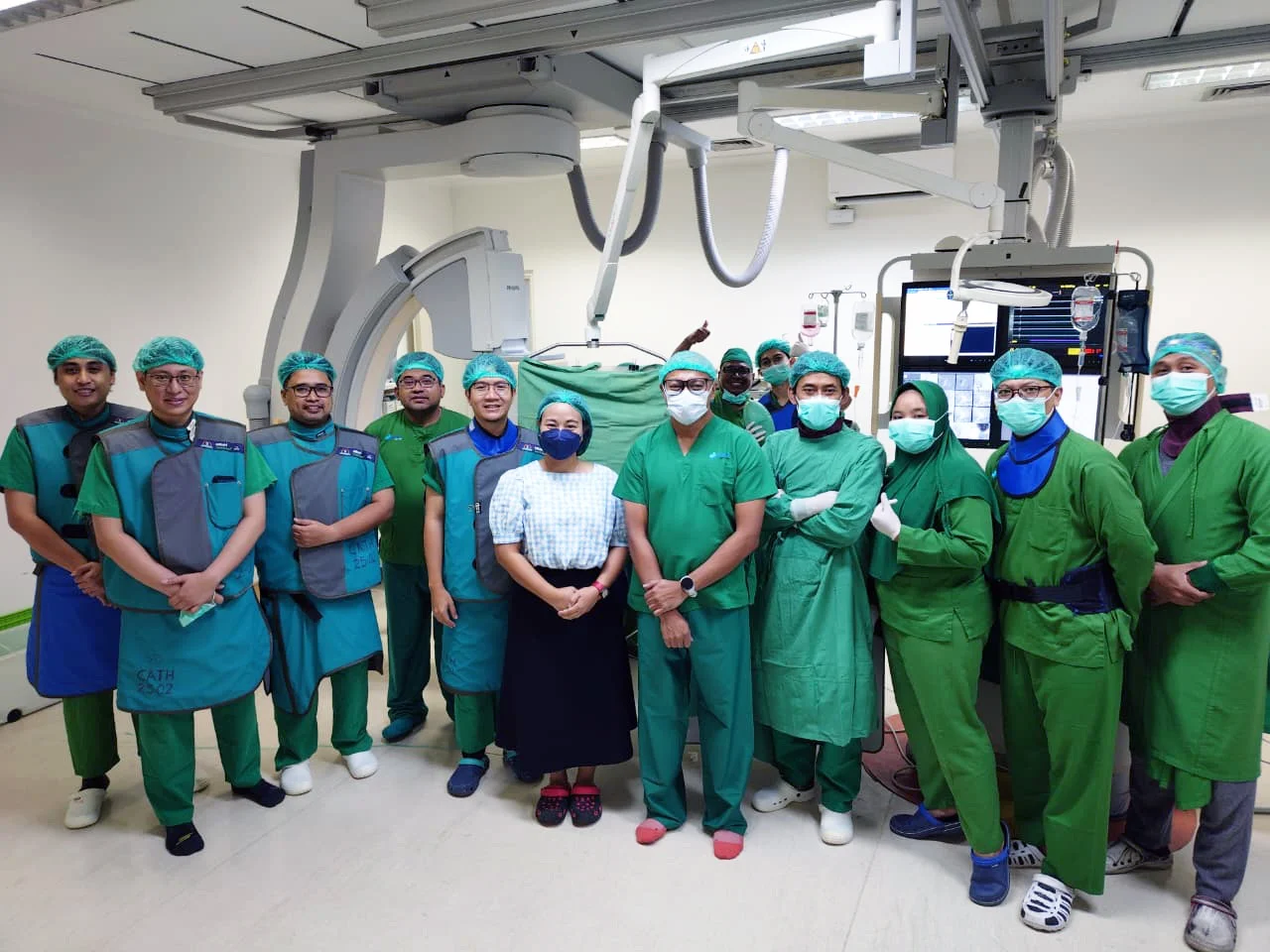
UNDIP, Semarang (5/7) – Diponegoro National Hospital (RSND) of Universitas Diponegoro has achieved a significant milestone in advancing modern healthcare services. On June 27, 2026, RSND successfully performed its first cerebral blood vessel catheterization procedure involving Digital Subtraction Angiography (DSA) and coiling for a stroke patient caused by a brain aneurysm.
dr. Nur Azizah, M.H., Sp.N., Neurology Specialist at RSND, led the procedure, together with a multidisciplinary team comprising neurosurgeons, radiologists, anesthesiologists, nurses, and other supporting medical personnel. This achievement marks an important step in strengthening RSND’s neurointerventional services, particularly for cerebrovascular disorders that require rapid, accurate, and precise treatment.
dr. Nur Azizah explained that the initiative was driven by the high prevalence of vascular diseases, including stroke, within the community. In some cases, patients present only with severe headaches. Further examinations may reveal subarachnoid hemorrhage caused by a ruptured aneurysm.
“Headaches in cases such as these are often referred to as thunderclap headaches or the worst headache ever because the pain is extremely intense. The cause may be a ruptured aneurysm, which occurs when a blood vessel has an abnormal wall structure. Without immediate treatment, the risk of recurrent bleeding is very high and can be fatal,” explained dr. Nur Azizah during an exclusive interview on July 2, 2026.
An aneurysm is a defect in the wall of a blood vessel that causes a section of the vessel to bulge like a balloon. When an aneurysm ruptures, it can result in brain hemorrhage and a rapid deterioration of the patient’s condition. Through the coiling procedure, the aneurysm is sealed from within the blood vessel to prevent recurrent bleeding.
According to dr. Nur Azizah, patient management begins with clinical examinations and imaging studies. If a CT scan reveals subarachnoid hemorrhage, further evaluation may include CT angiography to obtain a more detailed view of the brain’s blood vessels. In certain cases, DSA is performed to provide more precise information before determining the most appropriate treatment strategy.
“Digital Subtraction Angiography (DSA) enables us to visualize blood flow and vascular conditions more clearly. Based on these findings, the team can determine whether the aneurysm should be treated with coiling, clipping, or another approach that is safest for the patient,” she explained.
The primary challenge in this procedure lies not only in its technical aspects but also in cross-disciplinary coordination. Managing cerebrovascular cases requires strong collaboration among neurologists, neurosurgeons, radiologists, anesthesiologists, nurses, and hospital support services. Patient and family education also plays a critical role, as treatment decisions must be thoroughly understood by all parties involved.
“In cases like these, timing, facilities, team readiness, and communication with patients are crucial. Our ultimate goal remains the same: providing the best possible treatment while prioritizing patient safety,” said dr. Nur Azizah.
The procedure offers significant benefits, including reducing the risk of recurrent bleeding and accelerating patient recovery. In certain cases, severe headache symptoms can improve considerably after treatment. Follow-up care, including medical rehabilitation, can then be provided according to the patient’s needs.
RSND Neurosurgeon dr. Muhammad Kamil, Ph.D., Sp.BS., added that the hospital proceeded with its first DSA and coiling intervention because the patient met clear medical indications and RSND had the necessary infrastructure, facilities, and human resources in place.
“This 74-year-old female patient suffered a stroke caused by an aneurysm. Based on her clinical condition, examination results, and multidisciplinary assessment, she met the criteria for DSA and coiling. The decision was reached through a medical consensus involving neurologists, neurosurgeons, radiologists, and anesthesiologists,” explained dr. Kamil.
He further described how the procedure was performed. A catheter was inserted through a blood vessel in the groin and guided toward the cerebral blood vessels. Using imaging technology, the team accurately identified the aneurysm’s location. Coiling was then carried out by inserting specialized coils into the aneurysm to seal off the source of potential bleeding.
“In simple terms, it is like performing brain surgery through a blood vessel in the leg. It is a minimally invasive approach that does not require opening the skull. In this patient’s case, the procedure was completed successfully in less than one and a half hours, and two coils were implanted,” he said.
One of the major advantages of minimally invasive procedures is faster recovery. By the third day following treatment, the patient’s condition had improved significantly, remained stable, and she was able to continue her care on an outpatient basis. In addition to reducing the risk of recurrent stroke caused by aneurysm rupture, the procedure also provides greater comfort for patients due to the relatively small incision involved.
“We hope this service will continue to develop sustainably. If future patients meet the appropriate medical indications, RSND will be able to offer more modern, safer, and patient-centered treatment options. Success depends on teamwork, management support, facility readiness, and an increasingly mature healthcare system,” Dr. Kamil concluded. This achievement marks an important beginning for the development of cerebral blood vessel catheterization services at RSND UNDIP.
Moving forward, RSND is committed to continuously strengthening its healthcare services through enhanced team preparedness, improved facilities, robust service systems, and cross-unit collaboration, ensuring that the public has access to modern, safe, and effective stroke treatment tailored to patients’ needs. (Public Communication/UNDIP/DHW)