


UNDIP, Semarang (27/3) – Students of Universitas Diponegoro (UNDIP) have once again demonstrated innovation in supporting sustainable development by applyingby applying technology and artificial intelligence. This time, a student from UNDIP’s Vocational School successfully developed an environmentally friendly industrial cooling product (biocoolant) derived from glycerol waste and enhanced by Artificial Intelligence (AI) technology.
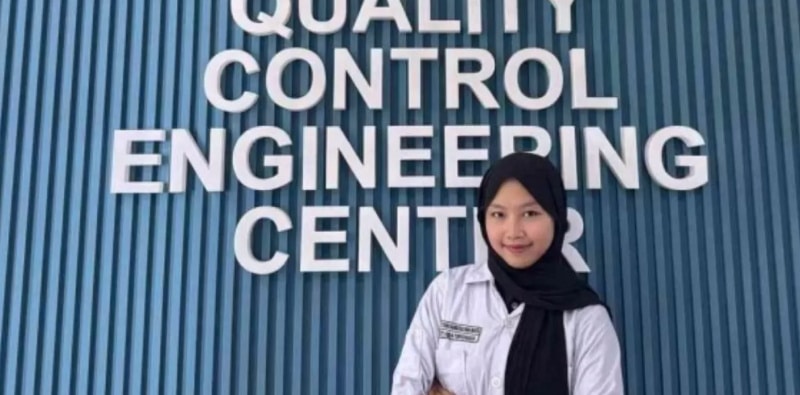
Siti Hibatirrohmah, a student of the Industrial Chemical Engineering Technology Study Program at the UNDIP Vocational School, developed the innovation. She processed glycerol—a by-product of biodiesel production—using an ultrafiltration-based purification method.
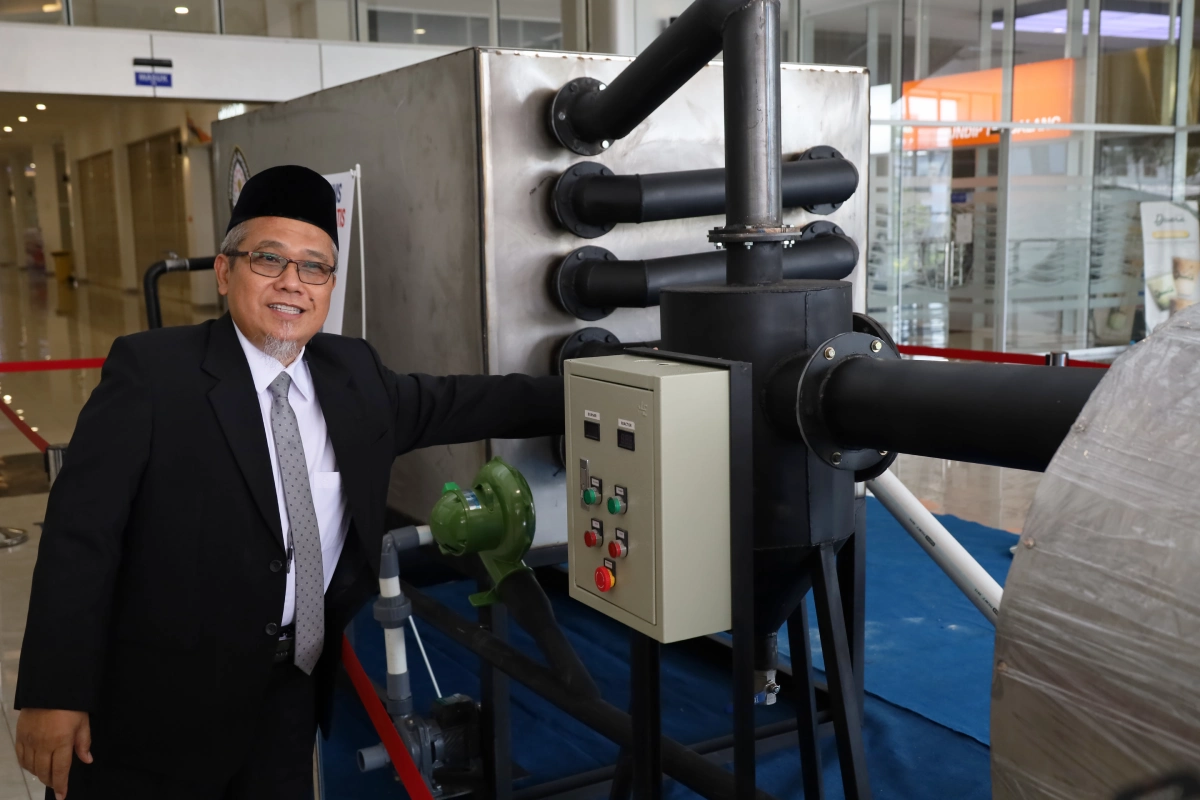
Through this research, glycerol, previously considered waste, can be transformed into a high-value product: an eco-friendly biocoolant. The product is expected to serve as an alternative to conventional industrial coolants made from synthetic chemicals that still rely heavily on fossil-based resources. Siti explained that through a structured scientific approach, she studied how contaminants such as methanol and fatty acids can be separated from glycerol using an ultrafiltration membrane system.
The key advantage of this research lies in integrating artificial intelligence into the purification process. AI is utilized to analyze process parameters in real time, optimize membrane performance, and predict glycerol purity levels with greater accuracy.
With this approach, the purification process no longer depends solely on manual experimentation but is supported by precise and adaptive data analysis. The research aims to achieve a glycerol purity level of up to 93.7 percent.
The use of glycerol waste as a raw material for biocoolants presents significant opportunities to develop more sustainable industrial technologies. In addition to creating economic value, this innovation helps reduce environmental impacts associated with the use of fossil-based materials.
The resulting cooling system is projected to be safer, more efficient, and more environmentally friendly than conventional cooling systems.
This achievement demonstrates that students in the Industrial Chemical Engineering Technology Study Program at the UNDIP Vocational School are capable of playing a strategic role in driving industrial transformation toward more sustainable, technology-driven practices.
This innovation reflects Universitas Diponegoro’s commitment to realizing its vision of “Noble and Valuable UNDIP” through innovative research that bridges scientific excellence with the real needs of society and industry. (Public Communication / Vocational School / Ed. Nurul)